 Chameleon
Shop Front Spraying: What to Check Before You Book
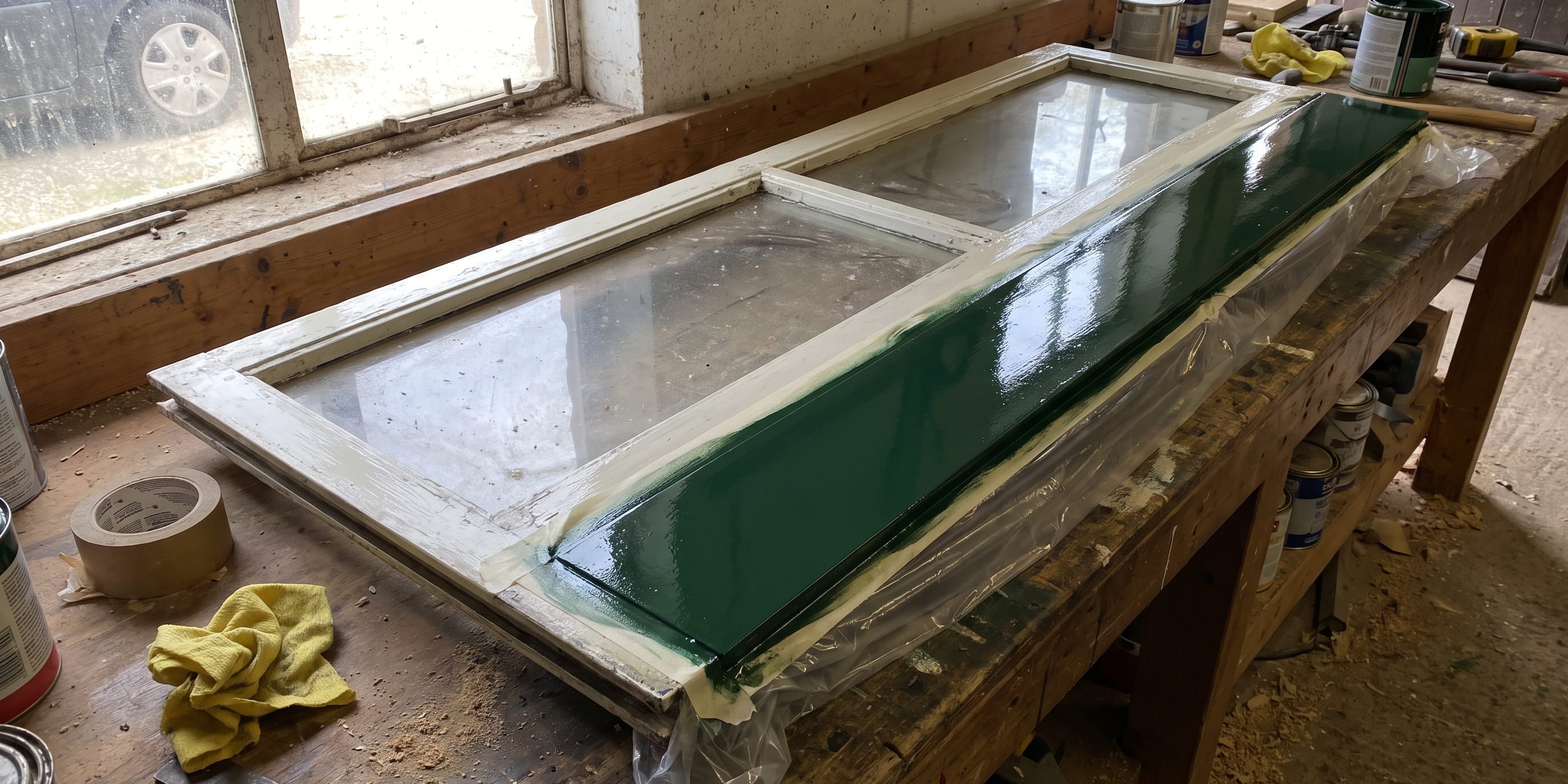
Replacing a shopfront is a capital project. Repainting one badly is a recurring embarrassment. Between the two sits shop front spraying, which, done properly, gives you a factory-smooth finish in an exact brand colour without stripping out frames, glazing or signage trays.
The reason it is worth thinking about carefully is that the outcome depends almost entirely on decisions made before anyone opens a tin. What the frontage is made of, what condition it is in, what your lease says, what the planning position is, how the colour has been specified and how the work is sequenced around trading all matter more than the spraying itself. This guide covers the checks a business owner or shopfitter should make before booking.
Respray or replace: making the call honestly
Spraying is the right answer when the frontage is structurally and functionally sound but looks wrong. That covers a lot of ground: powder coated aluminium that has chalked and faded to a dusty pastel version of its original colour, a rebrand that needs a new corporate palette across several sites, a change of tenancy where the shell is fine but the previous occupier’s colours are not, or a frontage that is simply tired next to freshly refurbished neighbours.
It is also the right answer when replacement is disproportionate. Aluminium shopfront systems are expensive to remove and reinstate, and doing so drags in glazing, thresholds, door closers, access compliance and often a longer closure. If the only problem is colour and surface appearance, spraying solves the visible problem without touching any of that.
Spraying is the wrong answer when the finish is not the actual fault. If the frames are corroded through, if sealed units have blown or gaskets have perished, if the timber is soft with rot, if doors are dropped and rubbing, or if the system is so old that parts are no longer available, then a respray postpones a decision rather than resolving it. Coating a failing substrate hides the problem for a season and then peels along with whatever is underneath.
There is also a middle path that gets overlooked. Frequently the correct scope is targeted replacement plus spraying: renew the failed door leaf or the rotten stallriser, then spray the whole frontage in one colour so the repair disappears. A surveyor who only offers you one of the two options is not giving you the full picture.
Substrates and condition: what can and cannot be sprayed
Almost every common shopfront material can be sprayed. The question is what preparation and coating system each one needs, and whether its condition disqualifies it.
Powder coated aluminium is the most common candidate and generally the most predictable. Older powder coatings chalk and fade but remain firmly bonded, which gives a stable base once the surface has been degreased, thoroughly abraded and treated with the appropriate primer or adhesion promoter. Anodised aluminium behaves differently and needs a specific approach, so it should be identified at survey rather than assumed to be powder coated.
uPVC frames, panels and cills spray well when they are sound, using an adhesion promoter and a coating system designed for plastics. The risk factors are heavy oxidation, surface crazing, and earlier coats of unsuitable household paint that have to come off first. Very dark colours on slim, heavily sun exposed sections are worth a conversation at specification stage rather than after the fact.
Steel covers everything from shutter boxes and roller shutters to older Crittall-style frames and railings. Here the controlling factor is corrosion. Surface rust can be mechanically removed and treated with a corrosion inhibiting primer. Pitting and perforation cannot be painted away, and section that has lost strength needs fabrication work or replacement before any coating is applied.
Timber shopfronts, particularly traditional fascias, pilasters, consoles and stallrisers, can be sprayed to a superb finish, but only after joinery repair. Rot has to be cut out, moisture content has to be reasonable, and open joints and end grain need attention. Timber also moves, so the coating system and the sealant detailing need to accommodate that.
GRP canopies, fascia panels and mouldings are sprayable once the gelcoat has been flatted and keyed, provided the panel is not delaminating or badly crazed. Composite cladding and signage trays are usually straightforward, but need to be identified individually because their surfaces vary.
Some findings should stop the job, or at least change its scope. Widespread flaking of an existing coating suggests a bond failure that needs investigation. Active water ingress will keep breaking the finish until the source is fixed. Silicone contamination causes defects that no amount of paint will resolve. And on older buildings, panels and soffit boards of uncertain composition should be identified before anyone sands them, because materials containing asbestos require a survey and a completely different approach.
This is why a competent contractor will inspect the frontage in person, identify each material, check adhesion, and sometimes carry out a small test patch rather than pricing from photographs alone.
Landlord, lease and planning: check before you commit
This is where shopfront projects go wrong most often, and it has nothing to do with paint.
Start with your lease. Most commercial leases contain an alterations clause and a decorating covenant. Changing the colour or finish of the shopfront is frequently treated as an alteration requiring the landlord’s written consent, and in a managed scheme there may be a tenant handbook specifying approved colours, permitted working hours, contractor insurance requirements and a permit-to-work process. There may also be a reinstatement obligation at the end of the term, meaning you agree to return the frontage to its previous colour. Signing that off knowingly is fine. Discovering it at dilapidations stage is not.
Then establish whether you need planning permission. Redecorating in a similar colour is often unremarkable, but several situations change that. Listed buildings commonly need listed building consent for changes to a shopfront’s colour or finish, and the sanctions for proceeding without it are serious. In conservation areas and areas covered by an Article 4 direction, alterations that would ordinarily be permitted development can instead require planning permission, and that includes changes to shopfront appearance. Conditions attached to an earlier planning consent, or a local shopfront design guide, can specify colours or exclude high gloss finishes. If the work touches signage or introduces new corporate colour on a fascia, advertisement consent may also be relevant.
None of this is a reason to abandon the idea. It is a reason to ask the local planning authority’s conservation or planning team, in writing, before you order materials. A short email and a two-week wait costs nothing compared with repainting a listed frontage twice.
Finally, the practicalities of access. Scaffolding, towers or hoarding on the public footway usually require a licence from the highway authority, and it takes time to obtain. Establish early who is applying for it and who is paying.
How brand colour matching actually works
RAL and BS references exist precisely so that a colour can be specified without argument. RAL Classic, the wider RAL Design range and BS 4800 and BS 381C are physical standards, so a coating manufacturer can mix reliably to them and you can hold a chip against the finished work and check.
Brand guidelines are often written in a different language. Pantone, CMYK and hex values are print and screen references, not architectural coating standards, so they have to be translated. That translation is done with a colour reading and human judgement, and the result should always be confirmed with a sprayed sample rather than a printed swatch, because ink on paper and pigment on aluminium behave differently.
Two further variables catch people out. The first is sheen. The same RAL number in matt, satin and gloss reads as three noticeably different colours in daylight, and gloss levels also change how much the finish shows surface imperfection. Sheen should be written into the specification, not left to assumption. The second is metallic and pearl finishes. Metallic flake orientation depends on application, which makes an exact match to an existing powder coated metallic genuinely difficult and sometimes best avoided by coating the whole elevation rather than part of it.
Weathering matters too. If you are spraying only one section and leaving adjacent original finish in place, matching the original factory code will produce a visible mismatch, because the old surface has faded. Matching to the weathered surface, or extending the scope to include the whole elevation, gives a better result.
For multi-site rollouts, record everything: manufacturer, product, colour reference, sheen and any bespoke tint formulation. That record is what lets site fourteen look like site one in three years' time.
Working around trading hours
Almost every high street frontage is sprayed outside trading hours. Evening, overnight and early morning shifts are normal, as are Sundays and quieter trading periods, and a good contractor will plan the sequence so that shutters, doors and entrances are usable when you open.
Be realistic about what a shift contains, though. A large proportion of any visit is masking and protecting: glazing, signage, shutters, brickwork, neighbouring units, pavement and anything parked nearby. Overspray control is not optional on a shared frontage. That masking then has to come off before you trade, so the productive spraying window inside a night shift is shorter than the shift itself.
The genuine limits are physical. Coating systems have minimum times between coats and a period before they are hard enough for masking removal and shutter operation. Low temperatures, high humidity, dew, rain and wind all restrict external spray work, and there are nights in a British winter when the correct decision is to stop. Managed schemes and local authority conditions can also cap permitted noise and working hours, particularly where there is residential accommodation above.
The workable answer is usually phasing: split the frontage into elevations or elements across several visits, with each visit ending in a trading-ready state. Ask how the programme handles a lost night, because weather contingency should be planned rather than improvised.
What a properly itemised quote specifies
A one-line price for "spray shopfront" tells you nothing and protects nobody. A properly specified quote should set out:
- Scope by element. Fascia, pilasters, stallriser, window frames, door frames and leaves, shutter and shutter box, canopy, soffit, bulkhead, signage tray, handrails and any ancillary metalwork, listed individually with an elevation schedule or measured areas.
- Substrate identification and condition assumptions. What each element is made of, and what condition the price assumes.
- Remedial work included and excluded. Rust treatment, joinery repair, filling, sealant renewal and gasket replacement, with the extent stated.
- Preparation method. Degreasing, decontamination, abrasion, removal of failed coating.
- The coating system. Manufacturer and product for the primer or adhesion promoter and topcoat, number of coats, colour reference, sheen level.
- Colour approval process. Whether a sample panel is provided and when sign-off happens.
- Masking, protection and containment, including how glazing, neighbouring units and the pavement are protected.
- Access and permits. Equipment, who applies for any footway licence, who bears the cost.
- Programme. Number of visits, shift pattern, working hours and the weather contingency arrangement.
- Site requirements from you. Power, water, alarm isolation, key holding, out-of-hours access arrangements.
- Guarantee. What is covered, for how long, and what is excluded.
- Insurance and documentation. Confirmation of public liability cover, and provision of risk assessments and method statements.
- Commercial terms. Exclusions, waste removal, snagging visit, VAT and payment terms.
If two quotes differ substantially in price, the itemisation is where you will find out why. One may include full joinery repair, a two-coat system with a named primer and three visits. The other may include a single coat over a wipe down. Both are shop front spraying. Only one of them will still look right in five years.
The sensible sequence, then, is straightforward: establish the lease and planning position, get the substrate and its condition properly assessed, fix the colour and sheen with a sample rather than a swatch, and insist on a scope you can read line by line. If you would like your frontage assessed on that basis, get a free quote from Chameleon and we will set out what your shopfront actually needs before anything is booked.
Questions
Frequently Asked Questions
Is shop front spraying cheaper than replacing the shopfront?
Usually, yes, because you keep the frames, glazing and structure and change only the finish. The saving disappears if the frames are corroded through, the sealed units have failed or the joinery is rotten, because you would be paying to decorate something that needs replacing anyway. A survey should tell you which situation you are in before you commit.
Do I need planning permission to change the colour of my shopfront?
It depends on the building and the location. Listed buildings, conservation areas and areas covered by an Article 4 direction commonly restrict changes to shopfront colour and finish, and conditions attached to an earlier consent can do the same. Your lease may also require the landlord’s written approval. Check both the planning position with the local authority and the alterations clause in your lease before you book anything.
Can uPVC shopfront frames be sprayed?
In most cases yes, provided the plastic is sound and properly prepared with the correct adhesion promoter and coating system. Heavily oxidised, crazed or previously badly painted uPVC is a higher risk, and very dark colours on slim, sun exposed sections are worth discussing before you specify them.
How accurate is brand colour matching on a shopfront?
Matching to a RAL or BS reference is reliable because those are physical colour standards. Brand colours supplied as Pantone, hex or CMYK values have to be translated into a coating, so the sensible route is a sprayed sample panel viewed on site in daylight and under your illuminated signage before the full frontage is coated.
Can the work be done overnight so we do not lose trade?
Out-of-hours working is common and often the only realistic option on a busy high street. The limits are physical rather than commercial: coatings need time between coats and time to harden before shutters are operated and masking is removed, and cold, damp or windy conditions can stop external spraying entirely.
