 Chameleon
Spraying uPVC Windows Grey: Choosing the Right Shade
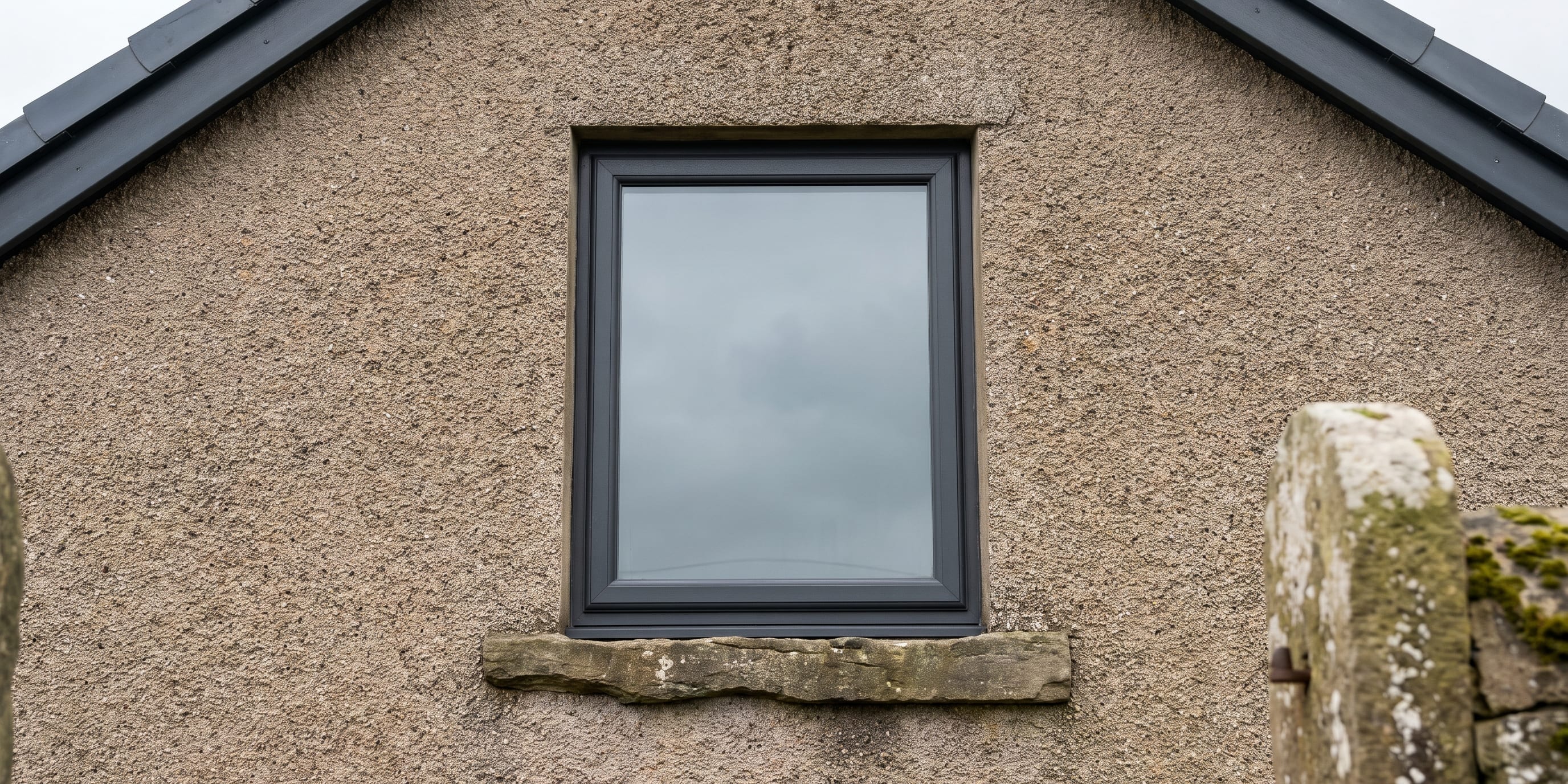
Ask ten people what colour they want their uPVC windows changed to and eight of them will say grey. It has been the default answer for years now, and for good reasons: it sits comfortably against almost every British brick and render, it makes glazing look larger, and it reads as current without being a statement.
What most people are not told is that grey, particularly a dark grey, is the one colour family where uPVC behaves differently. It is not a reason to avoid it. It is a reason to ask better questions before you commit, because the answers change depending on which grey you pick, which way your windows face, and what the frames are made of underneath.
Why anthracite grey became the default
Anthracite did not arrive by accident. When aluminium windows and bi-fold doors came back into fashion on new builds and extensions, they overwhelmingly came in a dark charcoal grey. Homeowners with uPVC frames then found themselves with a mismatch: a smart grey aluminium bi-fold on the back of the house and white uPVC everywhere else.
Window manufacturers responded by offering anthracite foils as standard, and within a few years the colour had moved from an upgrade to an expectation. That has a knock-on effect for anyone with older white frames. The windows themselves may be perfectly sound, with good glazing units and smooth-running hardware, but the house reads as dated purely because of the frame colour.
Spraying solves that without replacement. It is also why grey dominates enquiries: people are rarely choosing grey in the abstract, they are matching something. A new front door, a composite porch, a neighbouring property, a rear extension, or simply the look they have seen on every other street in the area.
The heat absorption question nobody mentions
Here is the technical point that sits underneath every dark colour conversation on uPVC.
White reflects most of the solar energy that hits it. Dark colours absorb it and convert it to heat. uPVC is a thermoplastic, which means it softens as its temperature rises. Push a uPVC profile hot enough for long enough and it can bow, sag between fixings, or distort around the corners where the welds are.
This is why the industry treats dark foils and dark coatings on uPVC with more care than pale ones. Foil manufacturers developed solar reflective pigment technology specifically so that a frame could look dark to the eye while reflecting a greater share of infrared energy than a conventional dark pigment would. Window manufacturers, in turn, often place conditions on dark-foiled products: additional steel reinforcement within the profile, restrictions on which profile systems a dark foil can be applied to, and guidance about unusually exposed or south-facing installations.
The same logic applies to sprayed coatings. The questions are the same ones a window manufacturer would ask: how much solar gain will this frame see, how well is the profile reinforced, and is the coating formulated for dark colours on plastic substrates rather than simply being a dark paint.
None of this makes grey a bad choice. Hundreds of thousands of factory anthracite uPVC windows sit happily on British houses. It does mean that a sprayer who shrugs at the question has not thought about it, and that matters more than the price on the quote.
Which grey: RAL 7016, 7021 and 7037 compared
"Grey" covers an enormous range. Three RAL references account for most uPVC work.
RAL 7016, anthracite grey. The default. This is the shade used for the vast majority of factory anthracite uPVC and a great deal of grey aluminium. It is a deep, slightly blue-leaning charcoal. If you are matching existing anthracite units elsewhere on the house, or you want the frames to read as the same family as a grey aluminium bi-fold, 7016 is almost always the answer. Against red and orange brick it provides strong contrast without the hardness of black. Against white render it is crisp. Against grey render it can be too close in tone unless the render is noticeably lighter.
RAL 7021, black grey. Darker and flatter than 7016, close enough to black that at a distance many people read it as black. It suits properties going for a more severe, contemporary look, and it pairs well with genuinely black ironmongery because there is no risk of the frame looking washed out next to the handles. Because it is darker still, the heat absorption conversation becomes more important rather than less.
RAL 7037, dusty grey. A mid grey, considerably lighter and more neutral than the other two. It is the choice for people who want grey without the weight of anthracite, and it works particularly well on properties with dark brick where a charcoal frame would disappear entirely. It also reads softer against cream or buff stone. Being a mid tone, it absorbs noticeably less heat than 7016 or 7021.
Worth thinking about alongside the shade: black ironmongery has become almost automatic with grey frames. Against 7021 it blends. Against 7016 it is a subtle step darker. Against 7037 it is a deliberate contrast. Hold the handles and hinges you intend to keep against a sample of each before deciding, because the relationship between frame and furniture is what you will actually see from the path.
How your existing frame colour and finish affects the result
The grey you end up with is partly a function of the existing frame colour and surface texture you are starting from.
White uPVC is the simplest starting point. The surface is smooth, non-porous and consistent, so once it has been thoroughly degreased, abraded and primed with a system designed for plastics, the grey lands evenly across the whole frame. Most grey conversions are from white, and this is why they tend to produce the cleanest results.
Woodgrain uPVC is a different proposition. The embossed grain is a physical texture moulded into the foil, and paint will follow it rather than fill it. Sprayed grey over a woodgrain frame gives you a textured grey, which some people like and some people are surprised by. If your expectation is the flat, smooth look of a factory anthracite frame, say so early, because woodgrain will not deliver it.
Cream, caramel and older coloured frames need care on opacity. A strong underlying colour can influence the first coats of a grey, particularly a mid grey like 7037, and the frames may need more build to reach a true, even shade. It is achievable, but it is a different job to spraying white and should be priced as one.
Age and condition matter across all of them. Frames that have oxidised or chalked, or that have been treated at some point with a silicone-based cleaner, need more preparation before anything will bond reliably. Our guide to spraying uPVC window frames covers the preparation sequence in more detail.
What a specialist should check before quoting dark grey
A proper assessment for a dark grey finish goes beyond measuring the frames. Reasonable things to see someone check:
- Orientation and exposure. Which elevations face south and west, and whether any frames sit behind glass, in a conservatory return, or in a position that traps heat.
- Profile condition and reinforcement. Whether the frames are already showing any bowing, and how substantial the sections are.
- Glazing and seals. The condition of gaskets and beading, because these are masked or treated differently depending on the system.
- Substrate identification. White, foiled, woodgrain or previously painted, each of which changes the preparation.
- Coating selection. Whether the system being proposed is specified for dark colours on plastic, rather than a general-purpose paint tinted grey.
On warranty, there are two separate things to keep straight. The first is any guarantee still running from the original window manufacturer on the profile and foil, which may be affected by applying a coating. The second is the guarantee the sprayer offers on their own work, covering adhesion, finish and colour stability. These are not the same thing, and the terms attached to a dark colour may differ from those for a pale one. Ask for both in writing.
Questions to ask before you commit
- Which RAL reference are you quoting, and can I see it sprayed on a sample in daylight against my brick?
- Which elevations face south, and does that change your recommendation on shade?
- Is the coating system specified for dark colours on uPVC?
- What exactly does your guarantee cover, for how long, and does it differ for dark greys?
- How will the existing finish, particularly if it is woodgrain or coloured, affect the result?
- Are you spraying the outer frames only, or the internal faces and beading as well?
Grey remains the right answer for most people asking the question. The homes where it goes wrong are usually the ones where nobody asked which grey, or looked at the orientation, or checked what was underneath. Ten minutes of questions at survey stage is what separates a frame that still looks factory-fresh in several years from one that does not.
If you are weighing up anthracite against a lighter alternative, or you want someone to look at the elevations before you settle on a shade, Chameleon’s uPVC window and door spraying service starts with exactly that assessment.
Questions
Frequently Asked Questions
Can you spray white uPVC windows grey?
Yes. White uPVC is one of the easiest starting points because the surface is smooth, non-porous and uniform, so the grey lands evenly. The frames still need full degreasing, abrasion and a uPVC-specific primer or adhesion promoter before colour goes on.
Will a dark grey make my uPVC windows warp?
It is a real risk that competent sprayers design around, not a certainty. Dark colours absorb more solar heat than white, and uPVC softens as it warms. The variables are elevation, glazing, profile reinforcement and the coating used. A specialist should assess all of these before quoting.
Which grey is closest to standard anthracite windows?
RAL 7016 anthracite grey is the shade most factory-finished uPVC windows use, so it is the usual choice when you want sprayed frames to sit alongside existing anthracite units or match a neighbouring property.
Does spraying uPVC grey affect the window guarantee?
It may affect the profile or foil guarantee from the original window manufacturer, which is separate from the guarantee a sprayer gives on their own coating. Ask both questions before work starts so you know exactly what each party covers.
Can you spray grey over woodgrain uPVC?
Usually yes, but the embossed grain texture will still be visible under the colour unless it is filled, which is rarely practical on windows. Grey over woodgrain reads as a textured grey rather than a smooth modern frame.