 Chameleon
Spraying White uPVC Windows Grey: What It Involves
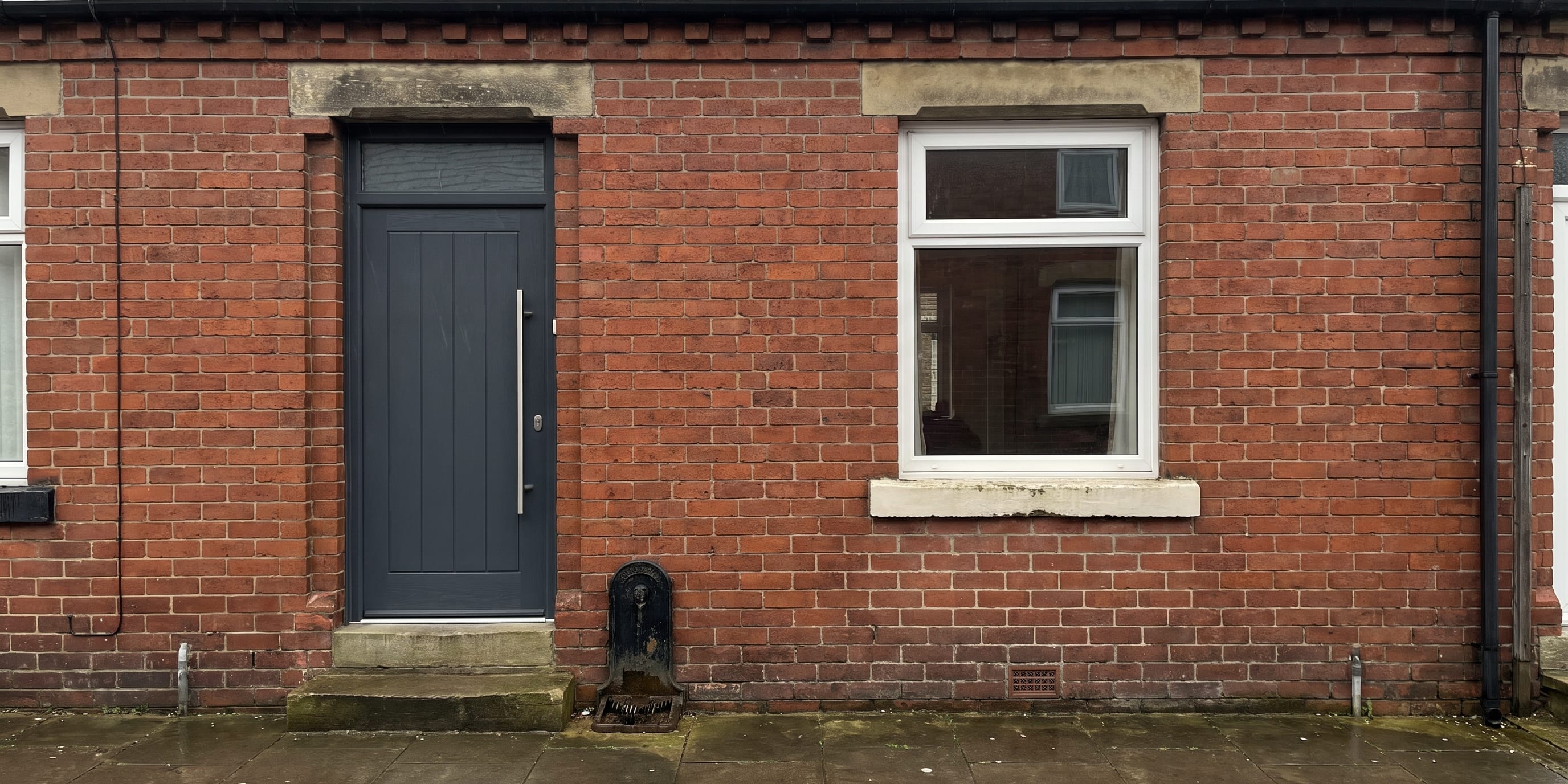
White uPVC windows going grey is comfortably the most requested colour change in domestic spraying. It is not a fashion that arrived quietly either. Drive down almost any street of houses built or re-windowed in the last thirty years and you will see the same thing: original white frames on one house, anthracite on the next, and a third somewhere in between with a grey front door and white windows that no longer quite agree with each other.
The appeal is easy to understand. The practical side is slightly less obvious. Spraying a light substrate a dark colour behaves differently to refreshing a colour with more of the same, and that difference shows up in coat count, in how the edges and rebates are treated, and in what else around the window has to be brought along for the result to look deliberate. This piece covers what the change actually involves.
Why white to grey dominates the request list
Two things drive it.
The first is that white was the default. For decades, uPVC meant white uPVC, and millions of homes were fitted with it because it was what the market offered at the price. Those frames are often structurally sound and perfectly serviceable. What has dated is the colour, not the window.
The second is that grey became the new default. Modern replacement windows, composite front doors, aluminium bi-folds, sectional garage doors and powder coated roofline are all offered in grey as standard, and anthracite in particular has become the colour people associate with a recently updated house. So a homeowner with sound white frames is looking at a straightforward proposition: the windows work, they just look like they belong to a different decade.
Spraying closes that gap without the disruption, cost and waste of ripping out frames that have years left in them. For the broader picture of how uPVC frame spraying works as a process, our guide to spraying uPVC window frames covers the preparation and finish in detail.
Covering white is a different job to refreshing a colour
If you are respraying a grey frame grey, or freshening a cream frame in a similar cream, the existing colour is doing some of the work for you. The new coating sits on a surface that is already close in tone, so opacity comes quickly and the film thickness needed is modest.
Going from white to a mid or dark grey is the opposite situation. White is a high reflectance surface, and any thin spot in the coating does not just look thin, it glows. The underlying brightness pushes through and reads as a lighter patch, most noticeably on the edges where the coating naturally thins and on the shaded undersides where it is harder to see what you are doing while you spray.
In practice that means a colour change like this is built up over additional coats rather than being flooded on heavily in one pass. Heavy wet coats on a vertical frame cause runs, sagging and extended drying times, and they trap solvent in the film. Thin, even, controlled passes with proper flash off between them build opacity without any of that, and they give a flatter, more uniform finish when the light rakes across the frame in the evening.
The areas that need the most attention are the ones nobody looks at during the job and everybody looks at afterwards: the inner faces of the rebates, the gap where the sash meets the frame, the edges of the glazing beads, and the underside of the top frame member. These are the places where white shows through on a rushed colour change.
Preparation matters just as much. uPVC is a low energy surface and coatings do not grip it mechanically the way they grip timber. Degreasing, abrading and the correct adhesion promoter underneath the colour are what stop the finish peeling later. On a white-to-grey change, poor adhesion does not just fail, it fails visibly, because every chip reveals white.
The greys people actually choose
There is a long list of greys in the RAL system. A short list gets chosen.
Anthracite grey (RAL 7016) is the one most people mean when they say grey. It is a deep, slightly blue leaning charcoal and it is the colour the window and door industry adopted as its contemporary standard. Choosing it generally means your sprayed frames will sit comfortably alongside anything else modern on the house.
Basalt or slate greys (RAL 7012 and similar) sit a shade lighter and warmer than anthracite. They are a good option on red brick and on older properties where a near black frame feels too stark.
Agate grey (RAL 7038) and window grey (RAL 7040) are the light greys. These are a gentler step away from white and they suit rendered houses, cottages and anywhere a dark frame would visually shrink the window openings. They also hide dust and pollen better than people expect.
How these read on your house depends heavily on orientation and sheen. A north facing elevation sees cool, flat light for most of the day and will make a grey look darker and colder than the swatch suggests. A south facing elevation in summer will lift the same colour considerably. Dark greys on a sunny elevation also run warmer in surface temperature, which is worth being aware of on large expanses of frame.
Sheen level changes the perception again. A satin finish is the usual choice on uPVC because it reads as factory applied, holds its appearance well and does not highlight every slight undulation in the frame the way a gloss does. Matt finishes look superb on the right property but show handling marks more readily around opening sashes and handles.
The sensible move is always to view the shortlisted colours on the actual house, at different times of day, rather than deciding from a card indoors.
What else needs to match
A grey window with a white cill under it is the single most common way a colour change ends up looking half finished.
The elements that typically need to be included in the conversation are:
- Cills. The uPVC cill projecting below the frame is highly visible and catches direct light. Leaving it white draws the eye straight to it.
- Trims and add-on profiles. Cover trims, packers and mock sash bars are all part of the visual frame.
- Glazing beads. External beads are part of the frame as far as the eye is concerned. Internal beads only matter if you are spraying inside.
- Bay poles and corner posts. On bay windows these are substantial and must be included.
- Frames versus sashes. Spraying only the opening sash and leaving the outer frame white never works. The two are seen together constantly.
Then there is the inside versus outside decision. Many homeowners spray the exterior only and keep white internally, which preserves a light interior and matches how many factory finished windows are supplied. Others want grey throughout. Both are valid, but it should be a deliberate choice made before work starts, because it changes masking, access and the amount of coating required.
Does the colour change cost more?
It can, modestly. The preparation, masking, protection of glass and brickwork, access arrangements and labour on site are essentially identical whether you are changing colour or refreshing one. What changes is the material used and the time spent building full opacity over a white substrate.
That difference is usually smaller than people assume, because the bulk of the work in any uPVC spraying job sits in the preparation and masking rather than the colour itself. Two-tone work, where inside and outside differ, adds more than the colour change does, because it means two separate masking and spraying operations.
Any genuine quote should be based on a survey of your actual windows, their condition, the number of openings and the access required. Treat flat per window figures quoted without a look at the property with some caution.
Coordinating grey across the whole elevation
Windows are rarely the only white or coloured plastic on a house. Before committing to a shade, look at the front door, the garage door, the fascias, soffits and guttering, any conservatory or porch, and the gates or railings.
Grey is unforgiving of near misses. Two different greys next to each other read as a mistake far more obviously than grey next to white does. If the roofline is already anthracite, matching the windows to it makes sense. If the garage door is a warmer graphite, a cool anthracite window beside it will look wrong.
The good news is that most of these elements can also be sprayed, so the whole elevation can be brought into one colour family rather than leaving you to work around whatever shade was fitted ten years ago. It is worth planning the full picture even if you only do the windows this year.
What to check before you book
- Walk the elevations and note every white plastic element, not just the windows.
- Check the frames for cracks, failed welds or blown units. Spraying is a finishing process, not a repair for a broken frame.
- Check the state of the gaskets and seals. Perished rubbers are better addressed before a new finish goes on around them.
- Decide inside, outside or both, and confirm it in writing.
- Agree the exact colour reference and sheen, not just the word grey.
- View the shortlisted colours against your brickwork or render in daylight.
- Ask what guarantee is offered and what it covers.
- If you are in a conservation area, listed building or leasehold property, check what permissions apply before anything is booked.
Get those settled in advance and a white to grey change is one of the most transformative things you can do to a house for the money. Get them wrong and you end up with a grey window, a white cill and a front door that no longer matches anything.
If you are weighing up a colour change on your own frames, take a look at Chameleon’s uPVC window and door spraying to see how the process is handled and what it covers.
Questions
Frequently Asked Questions
Can white uPVC windows be sprayed grey without replacing them?
Yes. A correctly prepared and primed uPVC frame can be sprayed in any colour, including dark greys over white. The frames stay in place, the glass and brickwork are masked, and the finish is applied on site.
How many coats does it take to cover white uPVC with grey?
More than a tonal refresh. White is a high reflectance substrate, so a dark grey usually needs additional build to reach full opacity, particularly in rebates, around beading and on the shaded underside of frames.
Which grey is most popular for uPVC windows?
Anthracite grey (RAL 7016) is the most requested, because it matches the colour most commonly used on modern replacement windows, composite doors and aluminium roofline.
Does changing colour cost more than respraying the same shade?
It can do, because of the extra material and time needed to reach full opacity over white. The preparation, masking and protection are the same, so the difference is usually smaller than people expect.
Should the inside of the windows be sprayed grey too?
That is a decision, not a requirement. Many homeowners keep the internal faces white and spray only the exterior. Others go grey throughout, or grey outside and white inside to match the original factory look.