Chameleon
uPVC Door Spraying: What’s Different From a Window
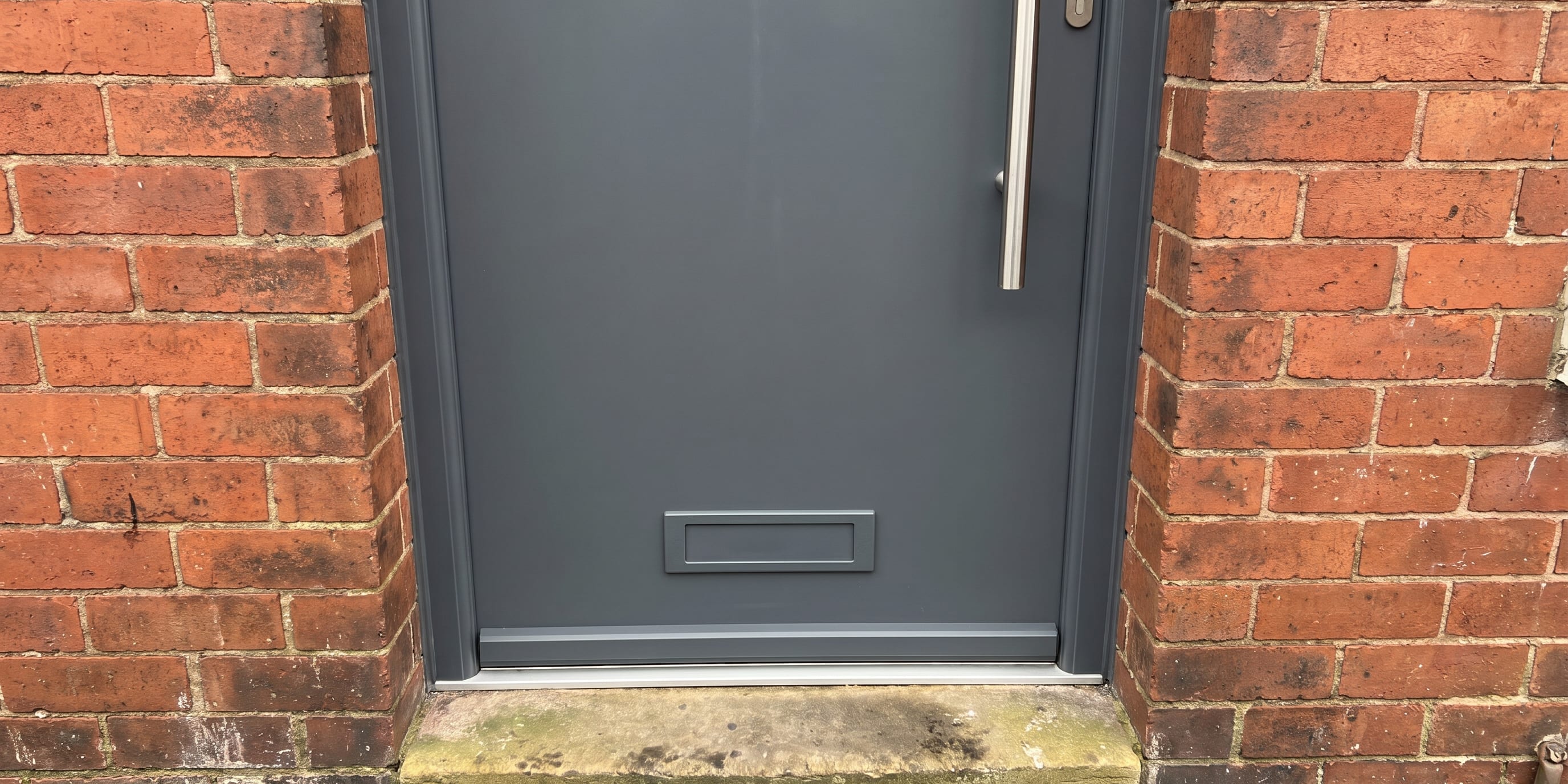
A lot of uPVC spraying advice treats a door as a window with a bigger panel. It is not. A window sits still in its hole, gets opened occasionally, and has nothing bolted through its face. A door gets pushed, pulled, kicked at the bottom with a shoe, has a lock mechanism running up its full height, carries a letterbox cut straight through the slab, and swings on hinges thousands of times a year. Every one of those differences changes what a proper spray job has to do.
The door is usually the fiddly part of the job, and the things that go wrong on one are not the things that go wrong on a window.
What has to come off, and what gets masked
A door carries far more door furniture than a window, and most of it is structural rather than decorative. On a window the list is short: a handle or two, hinges largely hidden in the rebate, maybe a restrictor. Mask or remove, spray, done.
Handles. Both sides. A through-fixed door handle set is held by bolts that pass right through the slab, so removing it is straightforward in principle, but the door is then unsecured until it goes back on. That affects how the job is sequenced, particularly if the door is the only entrance in use. Handles should come off rather than be masked wherever possible, because masking around a backplate leaves a hard paint edge that shows the moment the handle is next changed.
The multi-point lock and its keeps. The lock strip runs the length of the door edge, and the keeps are set into the frame to receive the hooks and rollers. These are the single most important thing to protect. Paint inside a keep, or on the face of a hook, does not just look wrong, it changes the tolerance of a mechanism engineered to close within a millimetre or two. The strip itself is normally masked precisely rather than removed, and the keeps masked individually.
The letterbox. This is the one that separates a careful job from a quick one. A letterbox is a two part assembly with an outer flap, an inner flap or brush seal, and a cut right through the door. It should come out. If it is masked in place, you get overspray through the aperture onto the inside face, paint on the flap hinge so the flap stops closing cleanly, and a visible unpainted band wherever the plate sat. Removing it also lets the cut edge of the aperture be prepared and coated properly, which matters because that edge is exposed to weather.
The spyhole. Small, cheap, and a nuisance if masked badly. It unscrews from one side. Leaving it in and taping over it almost always leaves a halo.
Hinges. Door hinges are external and substantial, usually three of them, often adjustable. They can be masked carefully or, on some types, partially dismantled. What matters is that paint does not get into the adjustment points or the pivot. If it does, the door loses the ability to be tweaked later, which it will need as the building moves.
Seals and drainage. Compression seals should be masked, not coated. Paint makes them tacky and they tear on the next opening. Drainage slots in the frame stay clear.
uPVC doors versus composite doors
Both can be sprayed, but they are different substrates and the system should reflect that.
A standard uPVC door is extruded plastic with a slick, low surface energy face. Nothing sticks to it readily, which is exactly why it stays clean, and exactly why preparation is everything. The process is a thorough degrease to remove years of airborne grime and any silicone from previous cleaning products, a light key to the surface, a second degrease, then an adhesion promoter before colour. Skip the promoter and the coating sits on the surface rather than bonding to it, and you find out about it when a fingernail catches an edge.
A composite door is typically a GRP (glass reinforced plastic) skin over a solid core. The skin usually arrives from the factory already finished, sometimes with a woodgrain texture moulded in. That changes the preparation: you are keying back an existing coating rather than an untreated plastic, and the primer choice follows from what is already there. The woodgrain texture also affects application, because a textured surface holds more material in the grain and needs to be built up evenly rather than flooded.
There is a second complication with composite doors. Many are not solid colour through the skin, so if the existing finish is chipped or scratched the repair has to be made good before any colour goes on, otherwise the defect telegraphs through. Any sprayer quoting on a composite door should be looking at it closely rather than from the pavement.
The glazing in a door panel
Most front doors have glass in them somewhere, whether that is a single decorative panel, a set of small panes, or a full glazed cassette. How it is handled depends on how it is held.
Where the glass sits in a cassette with removable beads, the beads can be taken out so the glazing can be properly protected and the rebate coated to its full depth. This gives the cleanest result, because there is no paint line sitting halfway across a bead where it will later crack. Beads are not always cooperative. They are clipped, they have been in place for years, and older ones can become brittle, so there is a judgement call about whether removal risks breaking them. Where beads stay in, the glass is masked back to the bead edge with a hard line and the bead is coated as part of the frame.
Either way, the glass unit itself must be fully covered. Overspray on a sealed unit is removable, but it is far easier not to put it there, and on leaded or stained decorative panels the care level goes up again. The number of glazed panes is also one of the biggest drivers of time on a door. A single large pane is quick. Eight small panes with beads all round is a different job entirely.
Where a door wears, and what that means for lifespan
This is the honest bit, and it is where a door genuinely differs from a window in terms of what you should expect.
The flat faces of a sprayed door will behave much like sprayed window frames. South facing elevations get more UV, dark colours work harder than light ones, and the coating ages gradually across the whole surface.
The contact points are different. Five wear points take disproportionate punishment.
Around the handle. Hands, keys, rings, bags. This is the highest traffic square foot of paint on the entire house.
The letterbox flap. Metal hinging against the coated surface every single day, plus whatever the postman is pushing through it.
The bottom edge and the lower face. Feet, pets, mud, standing water on the threshold, and the occasional shove with a shoe when your hands are full.
The lock edge and the leading edge. The edge that meets the frame takes compression every time the door shuts, and the handle side edge gets scuffed by the keeps.
The hinge side. The slab flexes very slightly on every opening. Over thousands of cycles that flex concentrates near the hinges.
None of this means a sprayed door is a bad idea. It means a realistic expectation is that the faces hold up while the contact points show their age first. Ask about this directly when you get a quote, and ask whether touch ups to those specific areas can be arranged later. A sprayer who tells you a door will wear identically to a window is either not thinking about it or not telling you.
The operational check nobody should skip
A window that has been sprayed looks right or it does not. A door can look perfect and still be wrong.
Before the job is signed off, somebody should be checking:
- The key turns and the multi-point lock throws fully, with the hooks and rollers engaging their keeps without resistance.
- The handle lifts to its full travel and drops cleanly.
- The door closes without needing a shoulder, and without a new rubbing noise.
- The seals compress and release rather than sticking or tearing.
- The letterbox flap swings freely and closes flush.
- The hinges swing without binding and their adjusters are still accessible.
- The drainage slots in the frame are clear.
- The spyhole, if there is one, is clear and seated.
Coating film is thin, but build up in the wrong place is cumulative, and a tolerance that was already marginal can become a binding door. The fix is usually a hinge or keep adjustment, but it has to actually be done before everyone leaves.
Matching the door to windows that are staying
Three common scenarios, each with a different answer.
The door is being done at the same time as the windows. Easiest case. Same colour, same batch, same day, same conditions. The whole elevation reads as one.
The windows have already been sprayed, and now the door. Achievable, and the key is knowing precisely what was used before. A colour reference, ideally an actual code rather than a colour name, makes this straightforward. Without it, the new work is being matched by eye to a surface that has already weathered slightly. Either way, see the colour on a sample in daylight at the property rather than on a screen, because greys in particular shift considerably depending on the light around them.
The windows are staying as original uPVC and only the door is changing. Sometimes this is deliberate: an anthracite door against white windows is a common and perfectly good look. Where people run into trouble is trying to match new paint to original white uPVC. Factory white is not one colour, and aged white is certainly not. A deliberate contrast is usually a better decision than a near miss.
What actually drives the price of a door
Doors are quoted differently from windows because the variables are different.
Door only, or door and frame. Spraying the slab alone is less work than slab plus frame, but it rarely looks right unless the frame genuinely stays a sensible contrasting colour. Most jobs include the frame.
Two colours. Anthracite outside, white inside is one of the most requested combinations. It means two masking stages, two colour set ups, and the edges have to be resolved deliberately so the changeover line sits somewhere logical rather than wherever the tape happened to stop. It costs more, and it should.
Glazed panel count. As above, the number of separate panes and whether beads come out makes a substantial difference to the hours involved.
Hardware complexity. A plain door with a handle and a cylinder is quick to strip and refit. A door with a letterbox, spyhole, knocker, numerals, a secondary pull handle and a cat flap is a different proposition.
Condition and access. Existing damage, deep scratches on a composite skin, or previous badly applied paint all add preparation time, and where a door cannot be left open or unsecured for long the job has to be sequenced around that.
Questions to ask before you book a door
Assuming you have already covered the general uPVC questions about preparation, products and warranty, these are the door specific ones.
- Will the letterbox, spyhole and handles be removed or masked, and why?
- How will the multi-point lock and the keeps be protected?
- Are you coating the door edges as well as the faces?
- How is the glazing being protected, and will the beads come out?
- My door is composite rather than uPVC. What changes about the system you would use?
- Who checks that the lock throws and the door closes properly before you leave, and what happens if it binds afterwards?
- If I want different colours inside and out, where will the changeover line sit?
- Can the handle area and letterbox be touched up later, and what would that involve?
- Can you give me the exact colour reference, so a future match is possible?
- How long before the door can be used normally, and how long before it can be closed against its seals?
That last one catches people out. A coating is touch dry long before it is fully cured, and shutting a freshly sprayed door hard against a rubber seal too early can leave a permanent impression.
A door deserves to be quoted and planned as its own item rather than bundled in as "and the door" at the end of a window price. Done properly, with the furniture off, the lock protected, the edges coated and the operation checked before anyone packs up, it transforms the front of a house for a fraction of what replacement costs. If you are weighing up a door on its own or a full set of frames at the same time, have a look at Chameleon’s uPVC window and door spraying and get in touch with details of your door type, the hardware on it and whether you want the inside finished differently from the outside. Those three pieces of information are enough to give you a sensible answer.
Questions
Frequently Asked Questions
Can a composite door be sprayed as well as a uPVC one?
Yes. Both can be refinished, but the preparation and primer differ. uPVC is a slick, low energy plastic that needs degreasing, keying and an adhesion promoter. A composite door with a GRP skin is usually already factory coated, so the existing finish is flatted back and primed. A sprayer should be able to tell you which system they are using on your door and why.
Does the door have to come off its hinges to be sprayed?
Not usually. Most door spraying is done in place, with the door opened and supported so both faces and the edges can be reached. The hardware comes off or is masked, the glazing is protected, and the surrounding area is sheeted. Removing a door entirely is rare and adds cost and security risk.
Will spraying stop my door closing properly?
It should not. Coating films are very thin, but paint can build up on a leading edge or around a keep if masking is sloppy. A competent sprayer checks the lock throws cleanly, the handle lifts, the hinges swing freely and the seals are not stuck before they leave.
Can the inside of the door be a different colour from the outside?
Yes, and it is a common request. Many people want anthracite grey outside and white inside. It means two separate masking stages and two colour set ups, so it costs more than a single colour job, but it is entirely achievable.
How long does a sprayed door last compared with sprayed windows?
The flat faces of a door age at much the same rate as a window. The difference is in the contact points: handles, letterbox flap, the lock edge and the bottom of the door all take daily wear a window never sees. Expect those areas to show signs first, and ask your sprayer whether touch ups are offered.