Chameleon
uPVC Window Spraying: Will It Work On Your Frames?
Most people researching uPVC window spraying have already worked out that it costs less than replacement. That is not really the question keeping them on the fence. The question is whether it will actually work on their windows, and whether it will still look right in a few years' time rather than peeling off the sashes by the second summer.
That is a fair thing to worry about. Sprayed uPVC has a mixed reputation, and the reason is not the technology. It is that the outcome depends almost entirely on two things a marketing page rarely discusses: the condition of the frames before anyone opens a tin, and the specification of the paint system going onto them. Get both right and you have a durable, factory-smooth finish. Get either wrong and you have a cosmetic patch that fails visibly.
This piece walks through what the work involves, how to judge whether your frames are a sensible candidate, what genuinely drives the lifespan of the finish, and the limitations worth knowing about before you commit.
What uPVC window spraying actually involves
Window spraying is nearly always done in situ. The frames stay where they are, the glass and surrounding surfaces are protected, and the work happens in place over a small number of days depending on the size of the job.
Survey and colour agreement. A specialist should look at the frames in person rather than quoting from photographs alone. They are checking for surface condition, damage, hardware type, trickle vents, the state of the gaskets and sealant, and whether anything needs repair before coating. This is also where the colour gets pinned down against a recognised reference, usually a RAL number, so there is no ambiguity later. Anthracite grey, for example, exists in several closely related shades and "grey" is not a specification.
Protection and masking. Glass is masked, along with cills, brickwork, render, trims, internal finishes and anything else within overspray distance. Floors and furniture inside are covered where internal frames are being sprayed. Masking is slow, unglamorous work and it is one of the clearest indicators of a careful contractor. Crisp lines at the glass edge and at the junction with masonry come from patient masking, not from a steady hand at the trigger.
Hardware. Handles are normally removed. Hinges, friction stays, locks and keeps may be removed, masked or partially masked depending on the design. More on this below.
Cleaning and degreasing. This matters more on uPVC than on almost any other substrate. Frames carry years of atmospheric grime, and they may also carry silicone residue from sealant work, traces of mould release from manufacture, and remnants of household cleaners or polish. Any of that left in place becomes a point where the coating cannot bond. Proper preparation means washing the frames down thoroughly, then degreasing with an appropriate solvent cleaner, working section by section with clean cloths rather than spreading contamination around.
Abrading and keying. uPVC is a smooth, low energy surface. Coatings need something to grip, which means abrading the profile to create a key, including the awkward returns, bead edges and rebates where a sprayer is tempted to skip. On frames suffering from chalking this also removes the loose, powdery surface layer that would otherwise take the new coating off with it.
Final solvent wipe. Abrading creates dust, which has to come off so the surface is clean and dry immediately before priming.
Primer or adhesion promoter. Depending on the system, this is a dedicated uPVC primer or an adhesion promoter that chemically prepares the plastic for the topcoat. It is not optional and it is not interchangeable with whatever primer happens to be on the van.
Topcoats. Applied by spray gun in controlled coats with the correct flash off time between them, building to the film thickness the manufacturer specifies. This is where the finish quality comes from: even coverage, no runs, no dry spray on the returns, consistent sheen across every frame on the elevation.
Cure, refit and inspection. Coatings are touch dry long before they are fully cured. Sashes need to stay open, or at least unclosed against their gaskets, until the finish has hardened enough to take contact. Hardware goes back on, masking comes off, and the whole run should be inspected in daylight for missed edges and mask line quality.
Is your window a good candidate, or does it need replacing?
This is the part worth being honest with yourself about. Spraying is a coating process. It changes and protects the surface. It does not repair structure, and it does not hide a problem that is getting worse underneath.
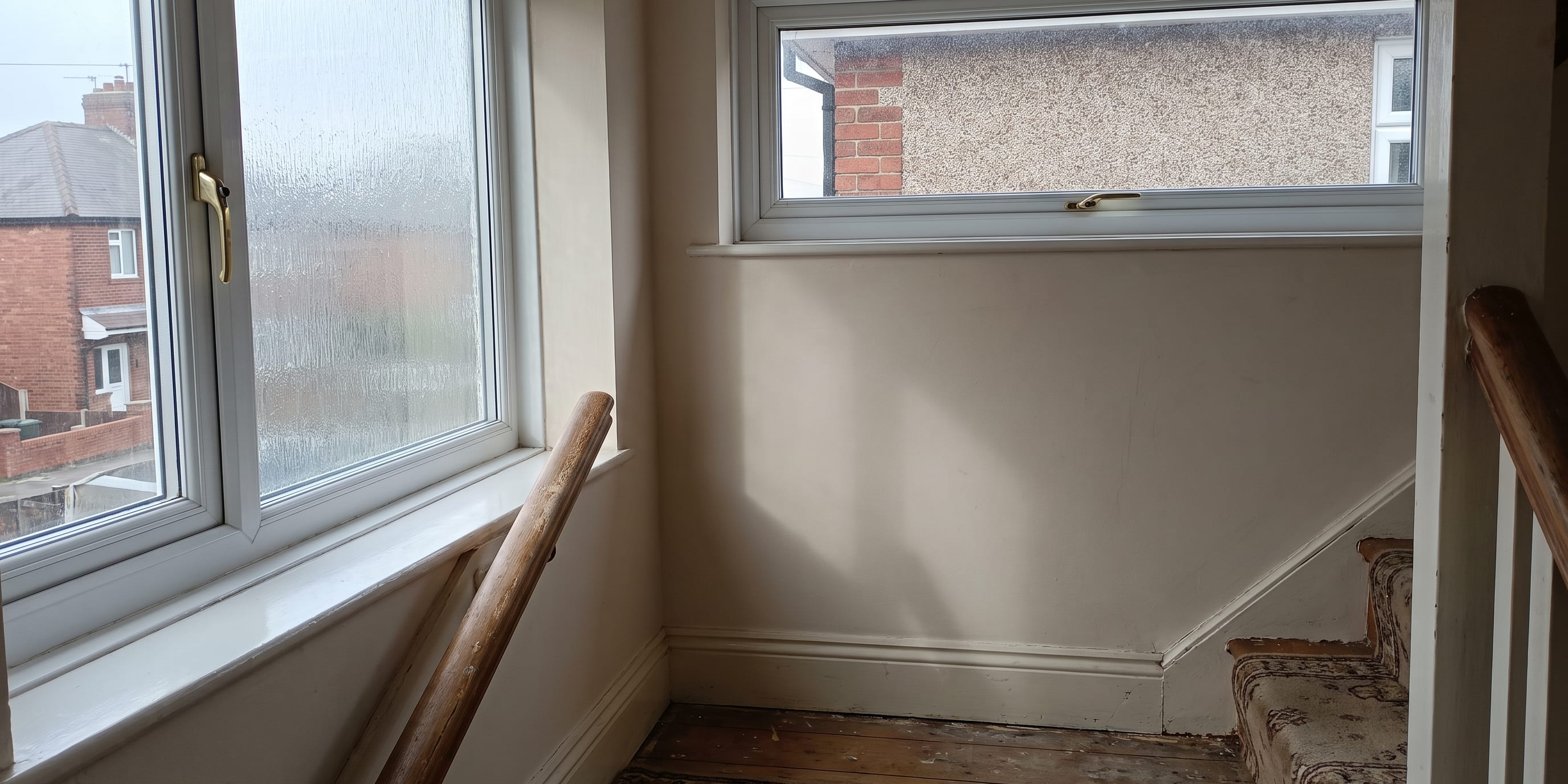
Good candidates are frames that are structurally sound but tired looking. Faded white that has gone yellow or grey. Chalking, oxidised surfaces where a wipe of the hand comes away powdery. A dated brown or mahogany woodgrain that no longer suits the house. Light scuffs and scratches. Frames that are simply the wrong colour after a rendering or roofing change. In all of these cases the profile itself is doing its job and the problem is genuinely cosmetic.
Frames that need attention first include any with cracked or split sections, failed corner welds, or sashes that have dropped so far they catch on the frame. Distorted or bowed profiles will still be distorted under a new colour. Deep surface crazing, the fine network of cracks that develops on badly degraded uPVC, is a sign the material itself has become brittle at the surface and it will show through.
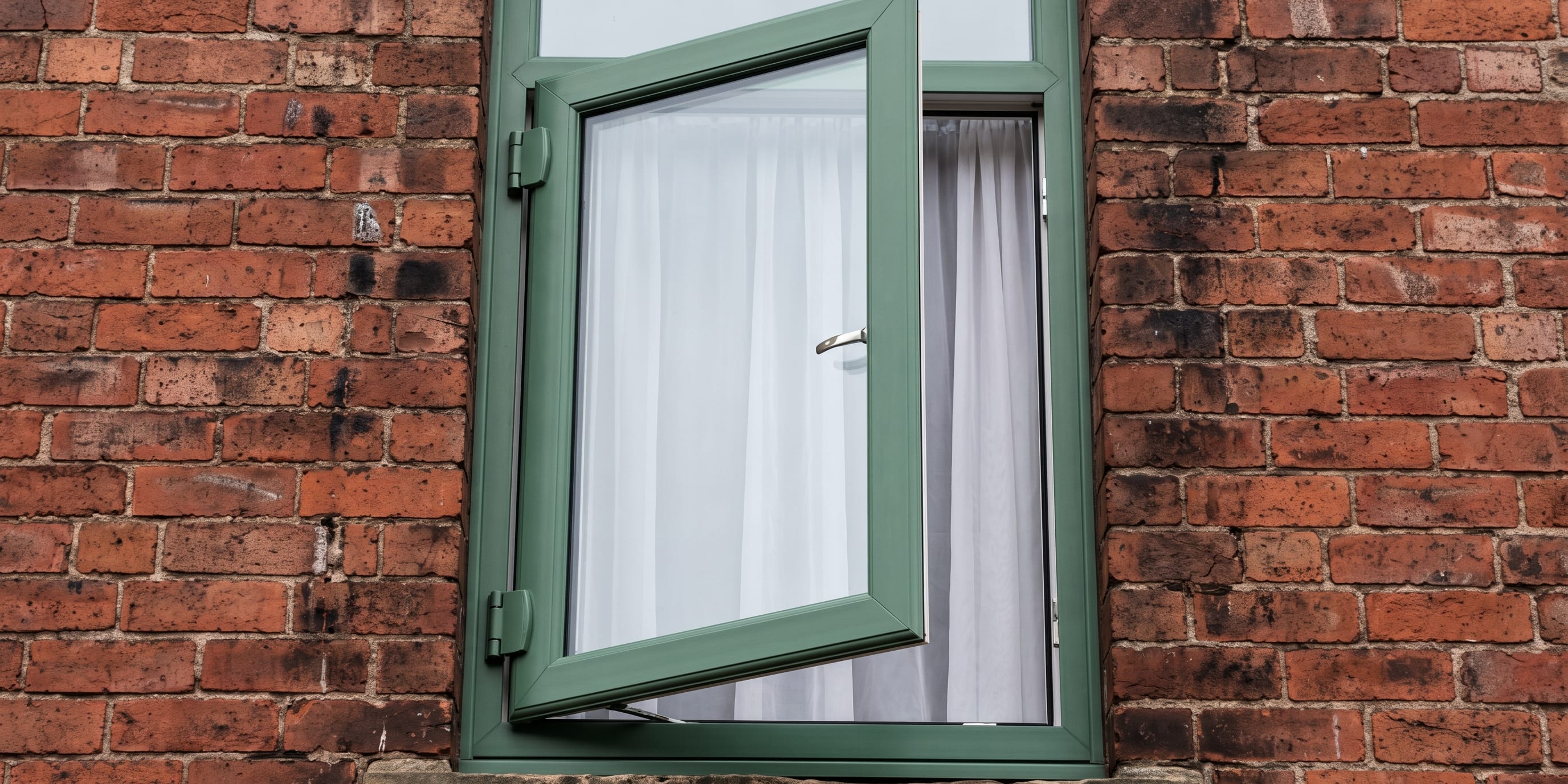
Foil wrapped frames deserve a specific mention. Many woodgrain and coloured uPVC windows are white profile with a printed foil laminate applied to the face. Where that foil is sound, it can be prepared and sprayed. Where it is lifting, bubbling or peeling at the edges, the coating will only ever be as well attached as the foil beneath it. That has to be addressed before spraying rather than sprayed over.
Things spraying does not fix. Blown or misted double glazed units are a glazing problem, not a frame problem, and they can usually be replaced independently. Worn hinges, sloppy handles and failing locks are hardware. Draughts and water ingress point to perished gaskets or failed external sealant. Rotten timber subframes behind the uPVC need building work. None of these is a reason to avoid spraying, but all of them are reasons to sort the underlying issue first, before the new finish goes on rather than after.
What determines how long the finish lasts: paint system and prep
Guarantee wording is reassuring and tells you very little. What determines longevity is the combination of preparation and paint system, and you can ask about both directly.
Preparation is the single biggest variable. Almost every premature failure on sprayed uPVC traces back to contamination or inadequate keying. A coating that cannot bond will peel regardless of how good the topcoat is. If a quote is noticeably cheap and the work is scheduled to be finished remarkably quickly, preparation is where the time has been saved.
The paint system itself. Two pack products, where a hardener is mixed with the base immediately before spraying, cure by chemical reaction into a hard, cross linked film. They are the standard choice for exterior uPVC because of that hardness and their resistance to weathering and cleaning. Single pack products that dry by solvent evaporation alone are generally less robust outdoors. Whichever route is used, the primer, topcoat and any adhesion promoter should be parts of a system the manufacturer intends to be used together, applied within the temperatures, humidity ranges, recoat windows and film builds on the data sheet.
UV stability and colour choice. Pigments differ in how well they hold up to sunlight. Some vivid reds and bright colours are inherently less stable than neutral greys and off whites. A good sprayer will flag this if your chosen colour sits in a more demanding category.
Film build and edge coverage. Corners, arrises and bead edges are where coating thins out and where failure starts. Even coverage on the awkward parts of a profile is a workmanship issue, not a product issue.
Exposure. A south or west facing elevation, a coastal location, or frames sitting behind a hedge that keeps them permanently damp will all age a finish faster than a sheltered north wall. That is not a fault in the coating, but it does mean the frames want washing down with clean water and a mild detergent more often, and never with abrasive pads or cream cleaners.
The real limitations
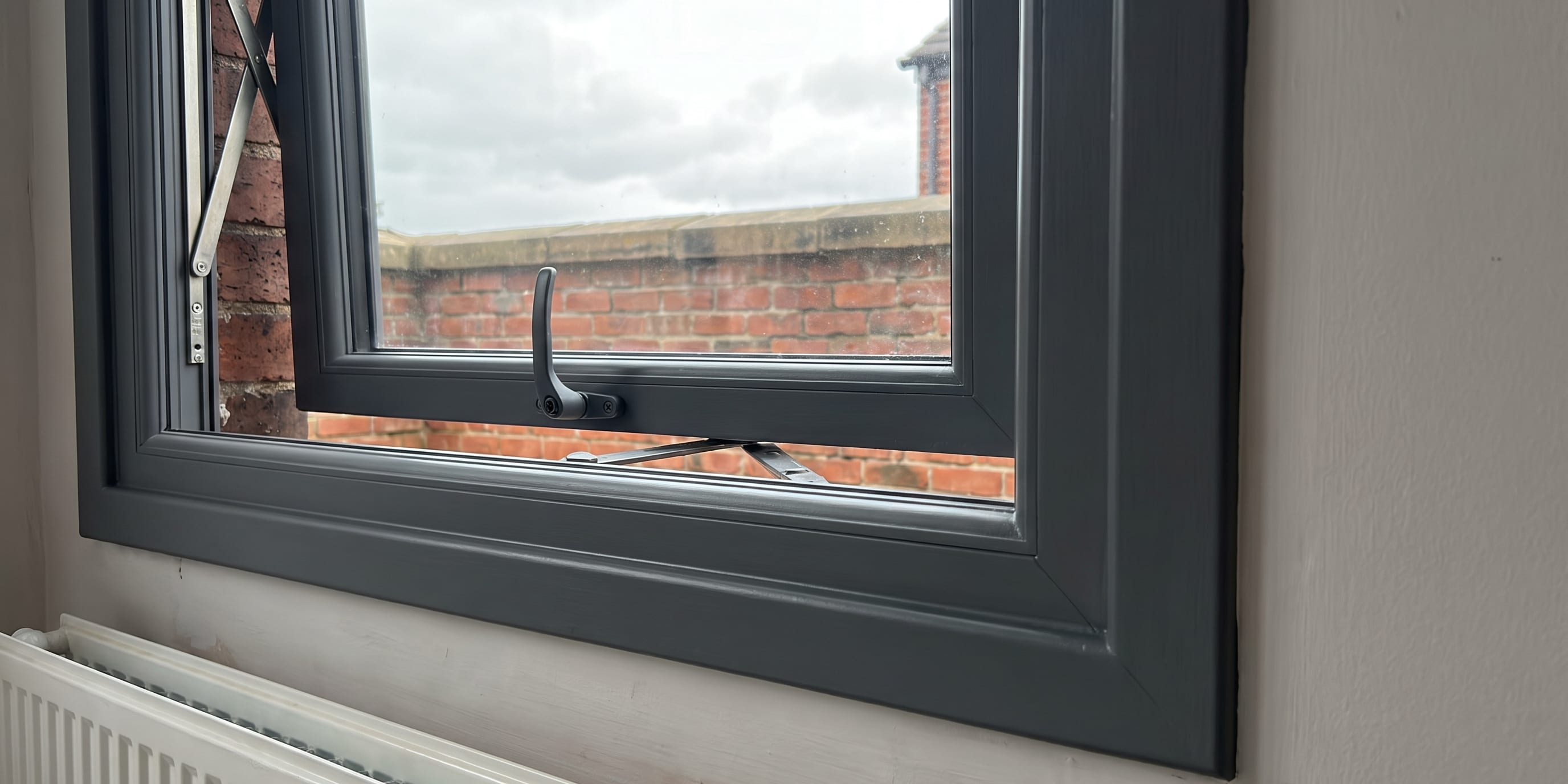
Hardware. Handles come off and go back on easily. Hinges and friction stays are a different matter. On many systems the hinge is part of what holds the sash in place, and removing it entirely means taking the sash out. Masking around hinges is usually the sensible option instead, which means the metalwork stays its original colour. On dark colour changes in particular, discuss in advance whether you would prefer replacement hardware in a matching finish, because white hinges against an anthracite frame are obvious once you notice them.
Moving parts and gaskets. Coating must not build up on the faces where a sash closes against its gasket, or in the mechanism channels. Paint in the wrong place there causes sticking, sash imprints and gaskets bonding to the frame. Rubber gaskets also do not hold coating well, so they are normally masked and left, or replaced beforehand if they are already perished. If you want the gasket colour to change, replacement is the route, not spraying.
Trickle vents and drainage. Trickle vents have moving flaps and a clear airway that must stay clear. The same goes for the drainage slots along the bottom of the outer frame, which let water escape from the glazing rebate. Both need masking properly. Blocked drainage is not a cosmetic issue, it is a water ingress issue.
Sealant. External silicone around the frame perimeter will not take coating reliably. If the sealant is tired, raking it out and replacing it before spraying gives a much better result than trying to paint over it.
Colour direction. Going darker is the popular choice, and it is where the genuine caution sits. Dark surfaces absorb considerably more solar heat than white ones. uPVC profile that was designed and specified as white, especially slim sections on a strongly sunlit elevation, was not engineered around that heat gain. This does not make dark colours off limits, and dark uPVC windows are manufactured and sold widely. It does mean the colour, the elevation and the profile should be considered together, and that a specialist who says yes to anything without asking about orientation is not thinking it through. Going lighter is less demanding thermally, but needs good opacity to cover a dark original colour, which usually means additional coats.
Spraying versus replacement, beyond the price
Disruption. Spraying is done in place. Nothing is removed, no plaster is damaged, no cills are disturbed, there is no making good afterwards and no skip on the drive. Replacement involves all of that.
Thermal performance. Spraying will not improve it. If your windows are single glazed, or the units are early double glazing with poor thermal performance, a new colour changes how they look and nothing else. That may be perfectly acceptable, but it should be a decision rather than an oversight. It is also worth knowing that misted units can often be replaced without replacing the frames, which is sometimes the better order of work.
Frame lifespan. New windows start a fresh service life. Sprayed windows keep the life they have left. If the profiles are sound, that remaining life can be substantial. If they are brittle and degraded, spraying is postponing an inevitable expense.
Consents and constraints. Flats, leasehold properties and blocks with managing agents often have rules about window appearance and about replacement. Conservation areas add their own considerations. Spraying is sometimes the more straightforward way to achieve a consistent look across a building, but the consent question belongs at the start of the process, not the end.
Waste and reversibility. Keeping serviceable frames out of a skip is a reasonable argument in its own right, quite apart from cost. Do treat a colour change as permanent, though. Coatings can be sprayed over again later, but you are not going back to bare white profile.
Questions worth asking before you book
- What products are you using, and are they a matched system? You are looking for a named primer or adhesion promoter and a named topcoat intended to work together on uPVC.
- How will the frames be cleaned and degreased, and will they be abraded? A clear, specific answer is a good sign. Vagueness here is the warning you are looking for.
- What happens with the hardware? Which pieces come off, which get masked, and what will the hinges and stays look like when the job is done.
- How are trickle vents, drainage slots and gaskets handled?
- Given my chosen colour and which way these windows face, is there anything you would raise? The answer tells you whether they are thinking about the building or just quoting square metres.
- How long before I can close and operate the windows normally?
- What does the guarantee actually cover, who stands behind it, and what would void it? Coating adhesion and cleaning requirements are the parts to read.
- Can I see completed work of a similar colour change? Mask lines at the glass edge and consistency across a run of frames are what to look at.
The honest summary
uPVC window spraying works well on frames that are structurally sound, thoroughly prepared and coated with the right system by someone who takes masking seriously. On frames that are cracked, distorted, badly crazed or carrying peeling foil, it is the wrong answer however low the price. The useful conversation is not about cost per window. It is about what condition your particular frames are in, what colour you want and which way they face, and what the coating specification is going to be.
If you want that assessed properly rather than guessed at, start with a survey. You can find the detail of Chameleon’s uPVC window and door spraying and arrange for someone to look at your frames in person, discuss the colour against a proper reference, and tell you honestly whether spraying is the right route for your windows.
Questions
Frequently Asked Questions
Can any uPVC window be sprayed?
Most sound frames can be, but not all. Chalking, faded or lightly scratched uPVC is a good candidate once it has been properly cleaned and keyed. Frames with deep surface crazing, cracked or split sections, failed welds, distortion or peeling foil wrap need repair or replacement first, because a coating follows the shape and condition of what sits underneath it.
Does uPVC window spraying seal the windows shut?
No. Opening sashes are sprayed and then left to cure before they are closed or operated, and a careful sprayer keeps coating off gasket faces, drainage slots and moving mechanisms. Poor masking is what causes sticking sashes, not the process itself.
Can white uPVC windows be sprayed a dark colour?
It is possible, but it deserves a proper conversation first. Dark colours absorb noticeably more solar heat than white, and a slim white profile was not designed with that in mind, particularly on a sunny elevation. Discuss the specific colour, the orientation and the profile with your sprayer rather than assuming any shade is a like for like swap.
Is spraying cheaper than replacing uPVC windows?
It is usually the less expensive route, but cost is the wrong reason to choose it on its own. Spraying changes the appearance and adds a protective coating. It does not improve thermal performance, replace worn hardware or fix failed glazing units, so compare on what each option actually delivers for your windows.
How long does a sprayed uPVC finish last?
That depends far more on preparation and the paint system than on the wording of any guarantee. Thorough degreasing, correct keying, the right primer or adhesion promoter and a UV stable topcoat applied at the specified film build are what keep a finish sound. Ask what products are being used and how they will be applied.