 Chameleon
Window Spraying: What Happens and What Affects Results
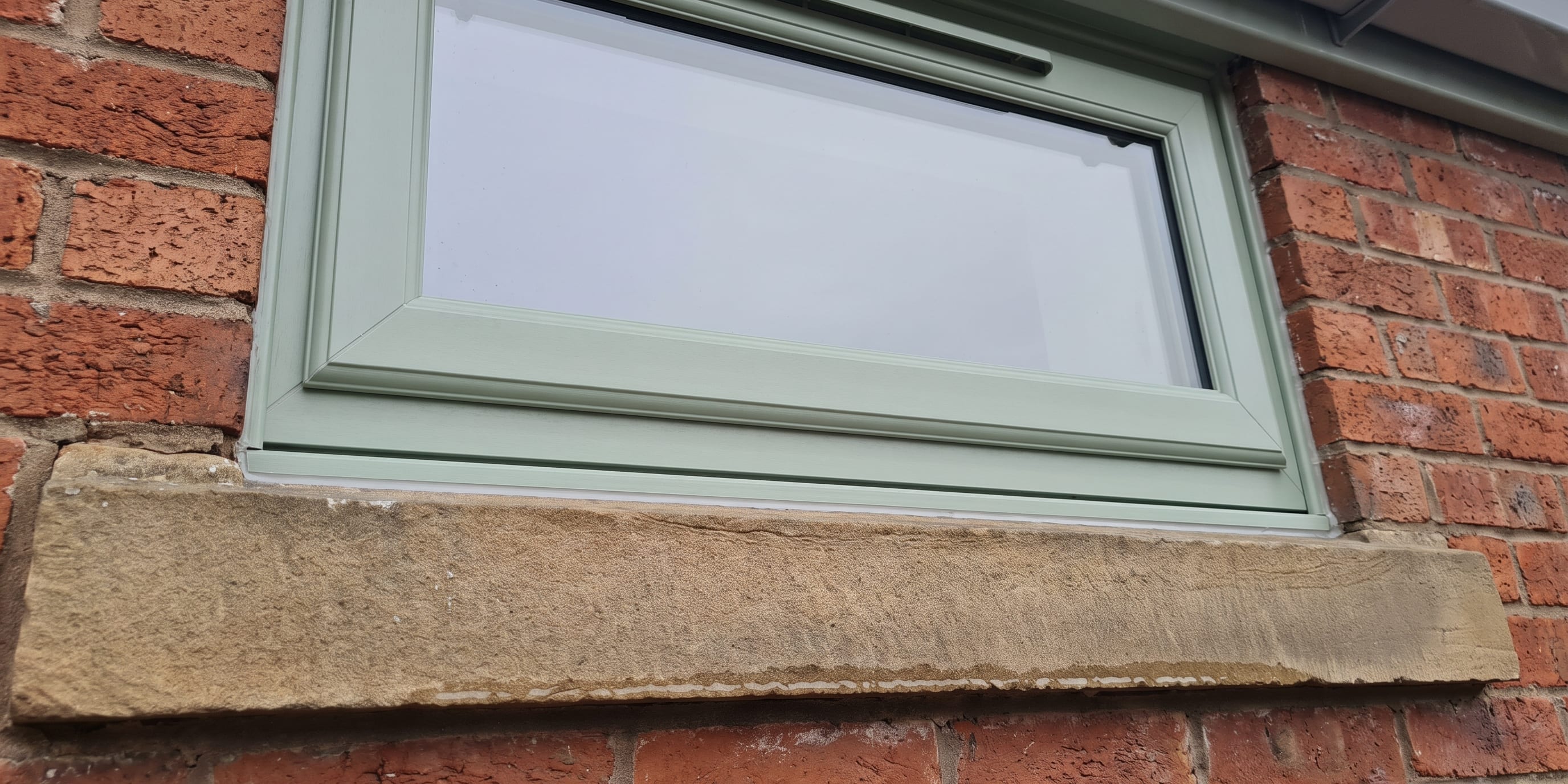
Window spraying is one of those trades where two quotes for the same house can differ substantially, and the reason is almost never visible in the headline price. The finish looks the same on day one whether the frames were properly prepared or simply wiped over. The difference shows up in year three. What follows is what genuinely happens during the job, what the weather and the site dictate rather than the contractor, and which variables actually move the price.
What window spraying actually is, and what it changes
Window spraying is the application of a liquid coating system to the frames of existing windows, usually by low pressure spray equipment, to change their colour and finish. It is a resurfacing job, not a replacement.
What changes: the colour of the frame, the sheen level (matt, satin, gloss or something between), and the appearance of light surface weathering such as chalking or minor discolouration. The result is a uniform, factory-like finish across every frame on the elevation.
What does not change: the glass, the sealed units, the locking mechanisms, the hinges, the thermal performance of the windows, or the structural condition of the profiles. If a sealed unit has blown, spraying the frame around it will not help. If a frame has cracked, warped or sagged so the window no longer closes squarely, coating it simply makes a poor window a different colour. A competent contractor will say so at survey rather than take the job.
That distinction matters, because window spraying is usually being weighed against full replacement. It is the right choice when the windows function properly and only look tired or dated, and the wrong choice when the units themselves have failed.
What actually happens on site
The spraying itself is a small proportion of the work. Most of the time goes on everything that happens before the trigger is pulled.
Survey and specification. A proper survey establishes substrate type (uPVC, powder coated aluminium, composite, previously painted timber), the condition of each frame, how many windows open, what ironmongery and trickle vents are fitted, and how the property will be accessed. It also confirms colour and finish, ideally against a physical reference rather than a screen.
Protection and masking. Glass, sills, brickwork, render, driveways, planting and neighbouring property all need protecting. Overspray is fine particulate and travels further than people expect. Masking is where corner-cutting shows later, because a crisp line between frame and glass is difficult to fake and easy to spot.
Cleaning and degreasing. Frames accumulate years of atmospheric grime, silicone residue, cleaning product film and, on uPVC, mould release agents and plasticiser migration. No coating bonds through contamination. This means a thorough wash followed by a solvent or specialist degreaser wipe, working clean cloth to clean cloth so contamination is lifted rather than moved around.
Abrasion and adhesion promotion. Depending on substrate and system, the surface is keyed by hand abrasion, treated with an adhesion promoter or primer, or both. On smooth, glossy uPVC this step is the entire basis of the bond. Skipping it is the most common cause of early failure, and it is invisible once the topcoat is on.
Coating, curing and reinstatement. The system is applied in controlled coats with the correct flash off time between them. Masking comes off at the right moment (too early and edges lift, too late and tape can bond), ironmongery is refitted, and operation is checked on every opening light before the site is cleared.
Why weather and site conditions genuinely constrain the work
In-situ window spraying is exterior painting with a fine finish expectation, which makes it unusually sensitive to conditions. This is not contractor caution. It is what the coating manufacturers specify.
Temperature. Every coating system has a minimum application temperature on its technical data sheet, along with a range within which it will flow, level and cure correctly. Below that range, film formation is compromised and cure times extend unpredictably. Above it, the coating can dry before it has levelled, which shows as texture in the finish. Surface temperature matters as much as air temperature, and a south facing elevation in direct sun can sit well above ambient while a north facing one sits below it.
Humidity and dew point. This is the constraint most often overlooked. If the frame surface is at or near the dew point, moisture is condensing on it, and coating over that moisture causes adhesion problems and finish defects. Data sheets normally require a stated margin between surface temperature and dew point. In practice that rules out early mornings, late afternoons in autumn, and any day where the air is heavy and still.
Wind and rain. Wind carries overspray, disrupts the spray pattern and dries the coating too fast at the edges of the fan. Light air movement is manageable with good masking and technique. Anything more and the risk moves from finish quality to the neighbour’s car. The film also has to be rain-safe before the weather turns, because a shower on a partially cured coating can cause blushing or runs.
A specialist works around this by monitoring forecasts and sequencing elevations to follow conditions through the day, by working out of direct sun where surface temperature is an issue, by using screening where practical, and, crucially, by being willing to stop. A contractor who gives you a fixed date in February and guarantees to hold it regardless of conditions is either not spraying outdoors or not reading the data sheet.
Opening lights, hinges, handles and trickle vents
This detail separates a job done by a window specialist from one done by a general sprayer.
Opening lights. An opening casement has edges, rebates and return faces that are only visible when it is open. A proper job sprays these, because otherwise the original colour appears every time the window is used. Getting coverage into those areas requires the light to be open during application and supported so wet edges do not contact the frame or seal. It must then stay open long enough to be safe to close, or the coating transfers to the gasket and leaves a witness mark along the seal line.
Hinges. Friction hinges are precision moving parts. Coating them up changes their stiffness and can eventually seize them. They are either masked carefully, removed where practical and refitted, or, where the client wants them colour matched, treated as a deliberate and separate part of the specification. What should not happen is a coat of paint sprayed indiscriminately across the hinge track.
Handles, locks and espagnolette gear. Handles are usually removed rather than masked, because a masked handle leaves a hard line and a visible ghost of the old colour behind the rose. Removal also means the frame beneath is properly coated. Locking mechanisms and keeps should never be coated, because build up on a keep changes the compression of the window against the seal and can make it stiff or draughty.
Trickle vents. These are functional ventilation components and, in many properties, part of the building’s compliance with ventilation requirements. Spraying them shut is not a cosmetic issue, it is a performance one. Vents should be masked, covered or removed, and their operation checked on reinstatement.
The test after the job is simple: every window should open, close, lock and seal exactly as it did before, and none of the previous frame colour should be visible when anything is opened.
What actually determines the price per window
Averages per window are a useful sanity check and a poor basis for a decision. Here is what genuinely moves the figure.
Colour change versus refresh. Going from white to anthracite requires more coats than refreshing white with white, and it is far less forgiving. Any thin spot, missed rebate or masking error shows immediately when there is high contrast beneath. Coat count is labour plus material, and it is the variable most often quietly reduced in a cheap quote.
RAL matching and bespoke colours. A standard stocked colour is cheaper than one mixed to a specific RAL reference, and matching to an existing element (a composite door, an adjacent block of frames, a heritage colour) adds a step. Matching to a physical sample under the right light is not a five minute job.
Frame condition. Heavily weathered, chalked or previously coated frames need more preparation. Frames with silicone smears, filler repairs or old adhesive residues need more again. Preparation time is the biggest variable in the whole job and the one most likely to be underestimated.
Opening versus fixed. An opening light costs more than a fixed pane of the same size, because of ironmongery removal, edge and rebate coverage, support during drying, reinstatement and operational checks. A quote that prices every aperture identically has probably not been surveyed properly.
Access and masking burden. Ground floor with clear standing is one thing. First floor over a conservatory roof, a narrow side return, or anything needing scaffold or a platform is another, and access equipment is a real cost line. Leaded lights, Georgian bars and small pane configurations multiply masking time per square metre of frame.
What makes a coating durable on uPVC specifically
uPVC is a difficult substrate for paint, and understanding why tells you what a good system has to do.
Adhesion. uPVC is smooth, low energy and often carries surface contaminants from manufacture and from years of weathering. A coating cannot simply grip it mechanically the way it grips abraded timber. Durable systems rely on correct preparation combined with a primer or adhesion promoter formulated for plastics. That chemistry is specific. A general purpose exterior paint over a wiped down frame will look acceptable and fail at the first thermal cycle.
Flexibility. uPVC has a high coefficient of thermal expansion. A dark frame in summer sun moves noticeably, and it does so repeatedly for the life of the coating. The film has to move with it. A hard, brittle coating will craze and crack along the areas of greatest movement, typically the long faces of large frames. Flexibility is a formulation property, not something added on site.
Heat build in dark colours. Dark coatings absorb more solar energy, raising the surface temperature of the frame. Some manufacturers publish guidance on colours suitable for plastic substrates for exactly this reason. Choosing a very dark colour on large, unshaded frames is a legitimate technical conversation, not a sales objection.
UV resistance. The finish has to hold colour and gloss under years of ultraviolet exposure. This is where cheap coatings reveal themselves, first as chalking and loss of sheen, then as visible fade, and it happens fastest on south facing elevations. Pigment quality and resin type drive this, and they drive material cost.
Film build. Even the best system underperforms if applied too thinly. Correct build means the specified number of coats at the specified thickness, which is a discipline question as much as a product one.
What makes a guarantee meaningful
A guarantee is worth exactly as much as its specificity and the longevity of the business behind it. Look for:
- The coating system named. If the quote does not say which product is being used, the guarantee cannot be checked against the manufacturer’s own performance data.
- What is covered. Adhesion failure, flaking, cracking, blistering, gloss retention and colour change are different failure modes and are often covered differently. A single headline number covering "the paintwork" tells you little.
- What is excluded. Mechanical damage, impact and abrasive cleaning are reasonable exclusions. A list broad enough to cover every realistic failure is not.
- Maintenance conditions. Most systems require periodic gentle cleaning and prohibit abrasive or solvent based cleaners. You should be told that at the point of sale, not on a claim.
- Who stands behind it. Its value depends on that company existing in several years' time, being insured and being contactable.
A shorter guarantee stated clearly is worth more than a longer one stated vaguely.
Questions to ask before you book
These separate a process from a pitch. A contractor working to a specification will answer them without hesitation.
- What system are you using, and can I see the technical data sheet? It states the substrates, preparation, application conditions and coat schedule the job should be run to.
- What preparation are you doing on my frames specifically? You want cleaning, degreasing, keying or adhesion promotion, and what happens where frames are chalked or contaminated. A generic answer is a warning sign.
- How many coats, and does that change with my colour? The answer should reference the colour change involved, not a fixed house policy.
- What happens to handles, hinges and trickle vents? Removed, masked or coated, who refits them, and what happens if older ironmongery breaks on removal.
- What conditions will stop you working, and what happens to the schedule then? Anyone who says nothing stops them is telling you something about their standards.
- How is the property protected, and who is liable for overspray? Ask specifically about vehicles, neighbouring property and planting.
- When can I open the windows, and when is it fully cured? Two separate answers.
- Are you insured, and can I see completed work of a similar age? Recent photographs show application skill. Older work shows durability, which is what you are actually buying.
The price of window spraying is mostly the price of preparation, and preparation is the part you cannot see once the job is finished. A quote that is materially cheaper than the others has found that saving somewhere, and the available savings here are preparation time, coat count, material quality and care around moving parts. All four are invisible on handover day, so ask for the specification in writing and test it.
If you are weighing up respraying the windows on your own property and would like a specification you can actually interrogate, you can get a free quote from Chameleon and put the questions above to it.
Questions
Frequently Asked Questions
Can any window frame be sprayed?
Most uPVC, aluminium, composite and previously coated timber frames can be sprayed, provided the substrate is sound. Frames that are cracked, warped, delaminating or badly UV degraded need assessing first, because coating cannot restore structural integrity or hide a failing profile.
Does window spraying affect the glass or the mechanisms?
It should not. Spraying changes the colour and finish of the frame only. Glass is masked, and handles, hinges and locking mechanisms are either removed, masked or sprayed deliberately as part of an agreed specification. Nothing should be painted shut or left stiff to operate.
How long before the windows can be opened and closed normally?
Most systems are touch dry quickly but continue to harden over a longer period. A contractor should tell you when the windows can be operated and when the coating is fully cured, because those are two different points in time and closing an opening light too early can mark the finish or bond it to the seal.
Can windows be sprayed in winter?
Sometimes, but the working window narrows considerably. Coatings have a minimum application temperature and need the surface to stay above the dew point while they dry. Short daylight hours, damp mornings and cold evenings can make in-situ exterior work unviable for weeks at a time, which is why a specialist plans around conditions rather than promising a fixed date in all weathers.
What makes a window spraying guarantee worth anything?
Clarity. A meaningful guarantee names the coating system used, states what it covers (adhesion, cracking, flaking, gloss retention and colour change are all separate things), sets out any maintenance conditions, and comes from a business likely to still be trading when you need it.