Chameleon
Kitchen Respray Ideas: Colours and Finishes That Work
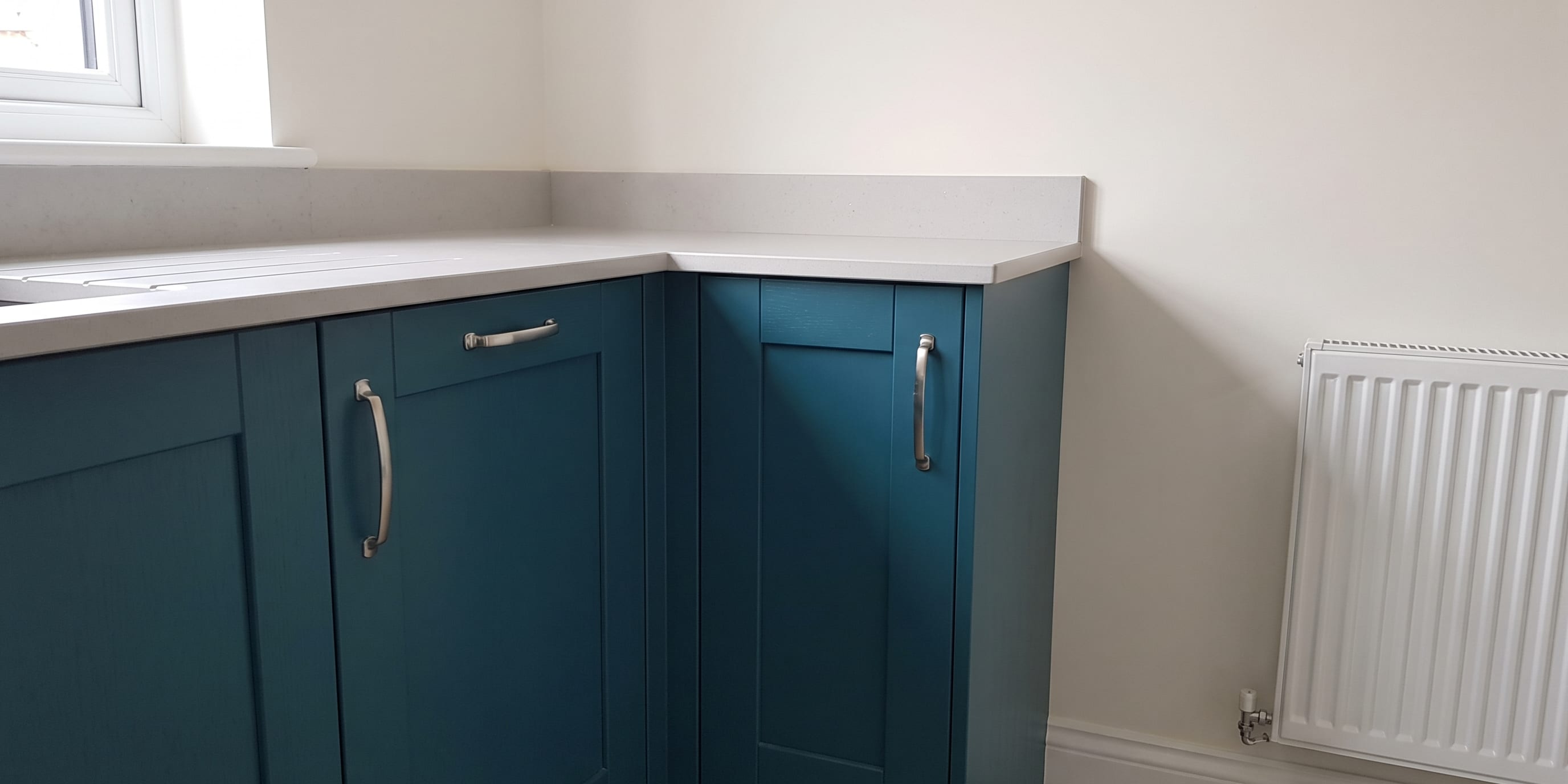
Most kitchen colour inspiration you will find online was written by a paint brand or a company selling new kitchens. Neither has to make the colour work on the cabinets you already own. A respray is a different exercise. You are working with existing doors, existing carcasses, a worktop that is staying, a floor that is staying, and a coating system that behaves in specific ways. The good news is that the range of what is achievable is wider than most people assume. The useful part is knowing where the real constraints sit before you fall in love with something.
Start with what your kitchen is made of
The single biggest factor in what colour and finish you can realistically have is the material of your doors and frames.
Solid timber and timber veneer take sprayed coatings well. Grain is the consideration rather than adhesion. On an open grained timber such as oak or ash, a sprayed finish will follow the grain texture unless the doors are filled and flatted back first. Some people want that texture visible under colour. If you want a dead smooth painted look on oak, say so early, because grain filling is extra work rather than a default.
MDF doors, including shaker profiles and routed panels, are close to ideal. The material is stable, has no grain to telegraph, and holds a crisp edge on mouldings. If your current kitchen is a painted or primed MDF shaker, you have the widest choice of colour and sheen available.
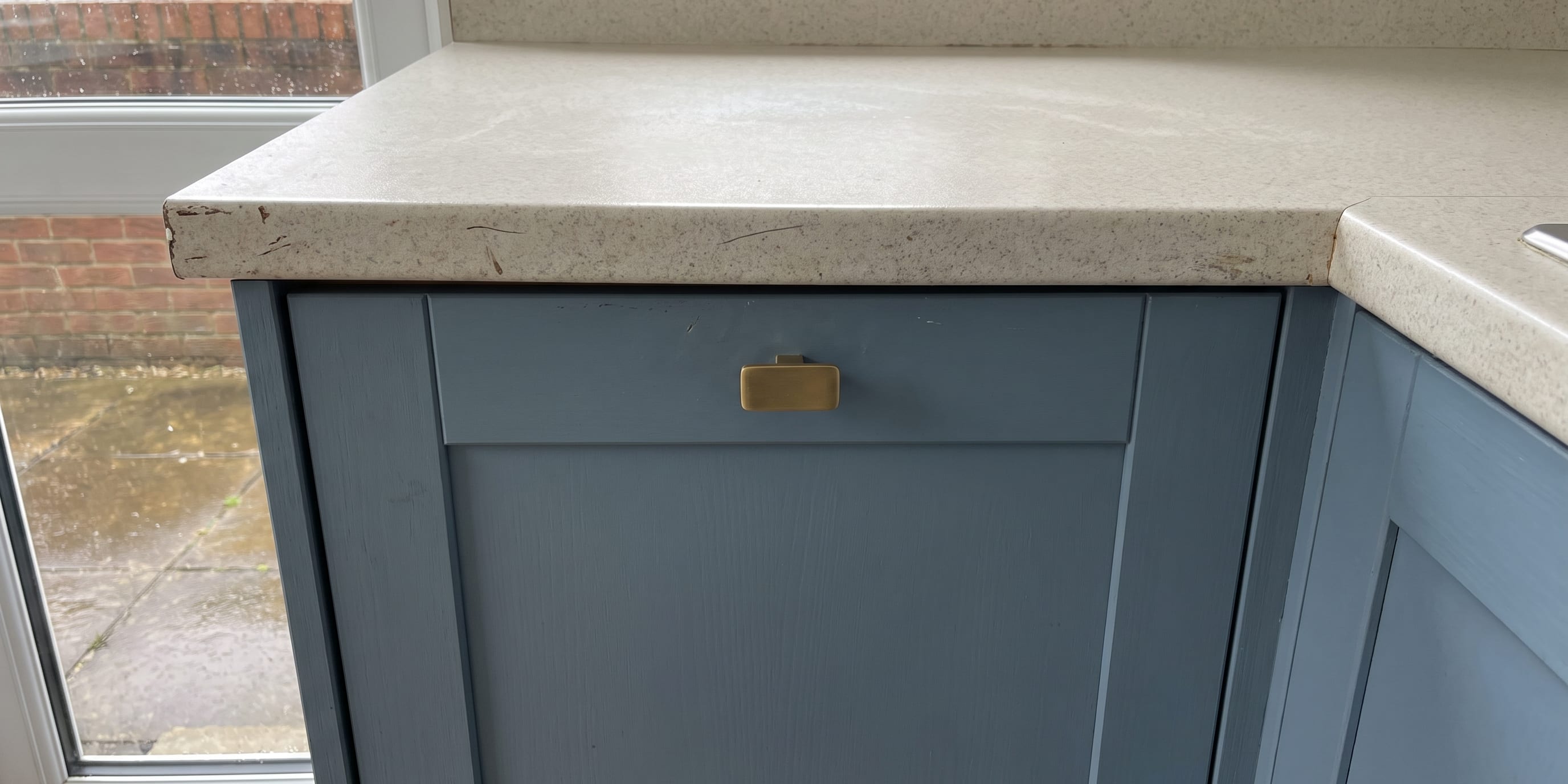
Melamine and laminate faced doors are the flat, slightly plasticky fronts common in kitchens from the 1990s and 2000s. These can usually be sprayed very successfully, but they rely entirely on correct preparation and the right adhesion promoting primer. The surface is non porous, so the coating has nothing to key into mechanically unless it is abraded and primed properly. Done correctly, the result is durable. Done cheaply, it chips at the edges within months.
Vinyl wrapped and foil wrapped doors are the ones that need inspecting rather than assuming. Where the wrap is sound, it can be prepared and sprayed. Where it is lifting at the corners, bubbling above the oven, or peeling along an edge, the film itself is the problem and no coating will fix it. Sometimes the sensible answer is to spray most of the kitchen and replace a handful of failed doors with plain MDF fronts sprayed to match.
High gloss acrylic and lacquered fronts can be resprayed, but the existing shine has to be fully flatted off. Any remaining gloss will show as a halo under the new coating.
Glass, metal and stone elements behave differently again. Glass inserts are normally masked out. Metal plinths, handles and appliance surrounds can sometimes be sprayed, but it is a separate decision rather than part of the same run.
Choosing a colour: RAL, NCS or a branded chart
Kitchen spraying coatings are generally tinted to order, which means you are not limited to a small stock range. That opens up two routes.
The first is specifying a RAL or NCS code. These are standardised colour systems, so the code describes the colour unambiguously. If you want something repeatable, or you are coordinating with another sprayed element elsewhere in the house, a code removes guesswork.
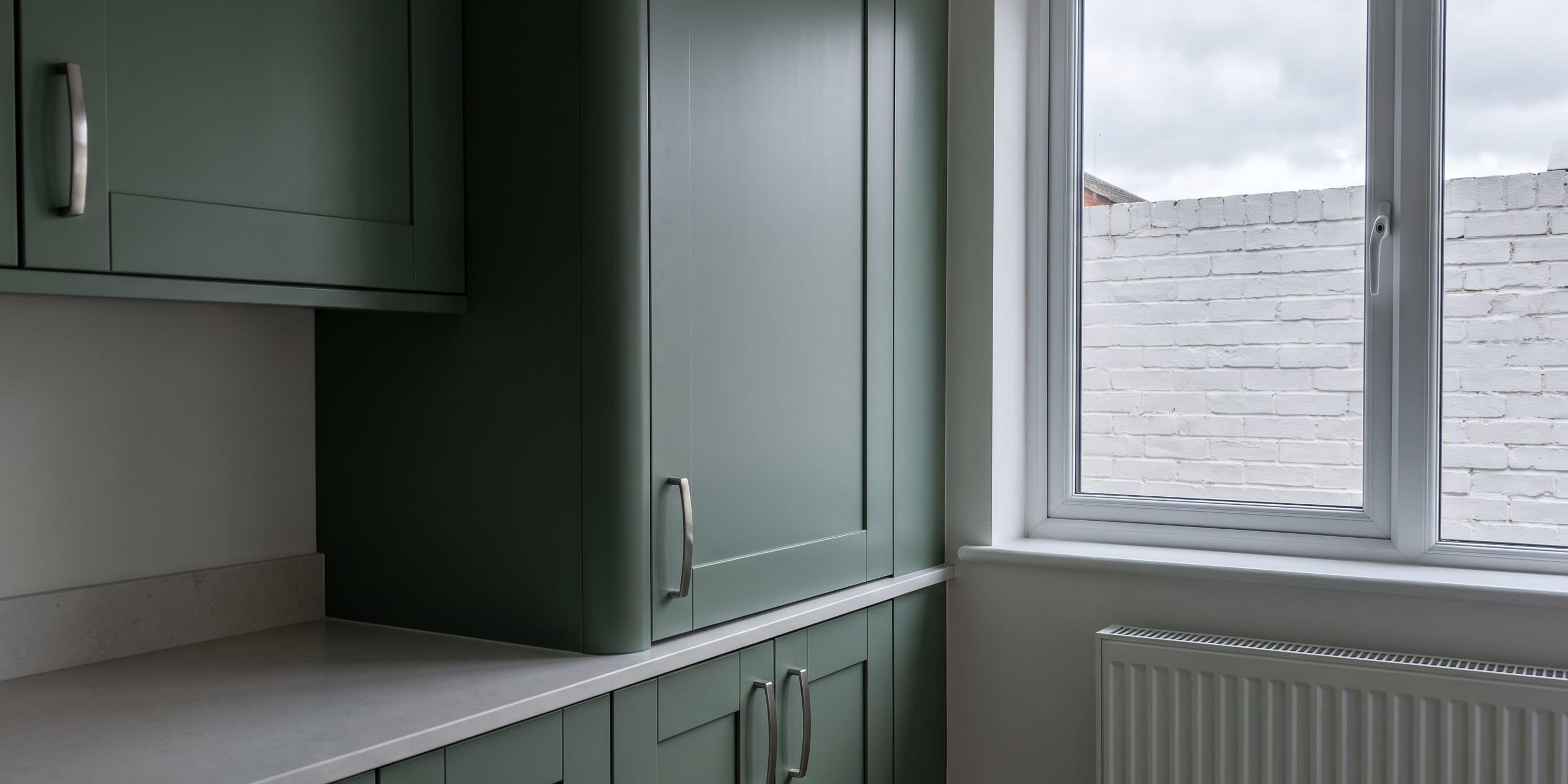
The second is picking from a branded paint chart, which is how most people actually shop for colour. Those heritage greens, muted clays and soft off whites exist on a decorator’s chart, not in a RAL fan. They can normally be matched closely in a sprayable coating, but it is worth understanding that a match is an interpretation. The tinter is reading a small paper chip, and the coating chemistry is not the same as the emulsion or eggshell the chip was printed to represent.
Two things make this manageable. First, ask for a sprayed sample on a representative offcut, in the actual finish you have chosen. Second, look at that sample in your own kitchen, at different times of day, held against the worktop. Colours shift dramatically under warm LED downlights compared with north facing daylight, and a chip viewed in a showroom tells you very little about how it will read at seven on a winter evening.
Sheen: where matt, satin and gloss each hold up
Sheen is not a cosmetic afterthought. It changes durability, cleanability and how much the finish reveals about the door underneath.
Matt and low sheen finishes look contemporary and hide minor surface irregularity well, because they scatter light rather than reflecting it. The trade off is cleaning. Matt surfaces can burnish, which means repeated wiping in the same spot leaves a slightly shinier patch. On doors around the hob, bin and kettle, that is where it shows first.
Satin and eggshell levels are the practical middle ground and the most commonly specified for kitchens. They wipe down easily, resist burnishing, and still read as a soft modern finish rather than a shiny one. For most households with normal daily cooking, this is the sheen that ages best.
Gloss is the most demanding. A high sheen coating magnifies every undulation, every grain line, every speck of dust in the air at the moment it was sprayed. It can look spectacular, particularly on handleless slab doors, but it requires exceptional substrate preparation and controlled conditions. It also shows fingerprints readily, which matters more on a dark gloss than a pale one.
Two-tone and accent schemes done the spraying way
Two-tone kitchens are popular and entirely achievable, but the economics differ from brush painting. A sprayer works in continuous runs: mask, prime, coat, cure, repeat. Every additional colour means another full cycle of masking and curing rather than simply picking up a different tin.
That means the sensible colour splits are the ones that follow natural boundaries in the kitchen:
- Base units in a deeper colour with wall units lighter, which also helps a small room feel taller.
- An island in a contrast colour with the perimeter run kept neutral.
- Tall housing units treated as a single block of darker colour, framing the rest.
- Interiors of glazed display cabinets in an accent shade, which uses very little material for a lot of visual effect.
What is harder to justify is a colour split that runs across the middle of a single door or along an awkward diagonal. Masking that cleanly, with a coating that needs a crisp edge and a cure period between colours, costs disproportionately more than the effect is usually worth. If the scheme interests you, raise it at the quoting stage rather than after the doors are off, because the layout of the split is what drives the extra time. Our guide to kitchen respray cost covers how factors like this feed into a quote.
Coordinating with the worktop, splashback and floor
The elements you are keeping should drive the colour choice, not the other way round. Doors are the largest coloured surface in the room, which makes them the easiest thing to get subtly wrong.
Undertone matters more than hue. A grey worktop with a blue undertone will make a warm greige door look muddy beside it, even though both are technically neutral. Hold samples directly against the worktop rather than next to it. For stone or quartz with pronounced veining, picking a door colour from one of the quieter secondary tones in the veining usually looks more considered than matching the dominant background.
Flooring deserves the same check. Warm oak or terracotta pushes you toward colours with some warmth in them. Cool grey porcelain tolerates cooler greens and blues far better. If both the floor and worktop are busy, the doors are the place to be calm.
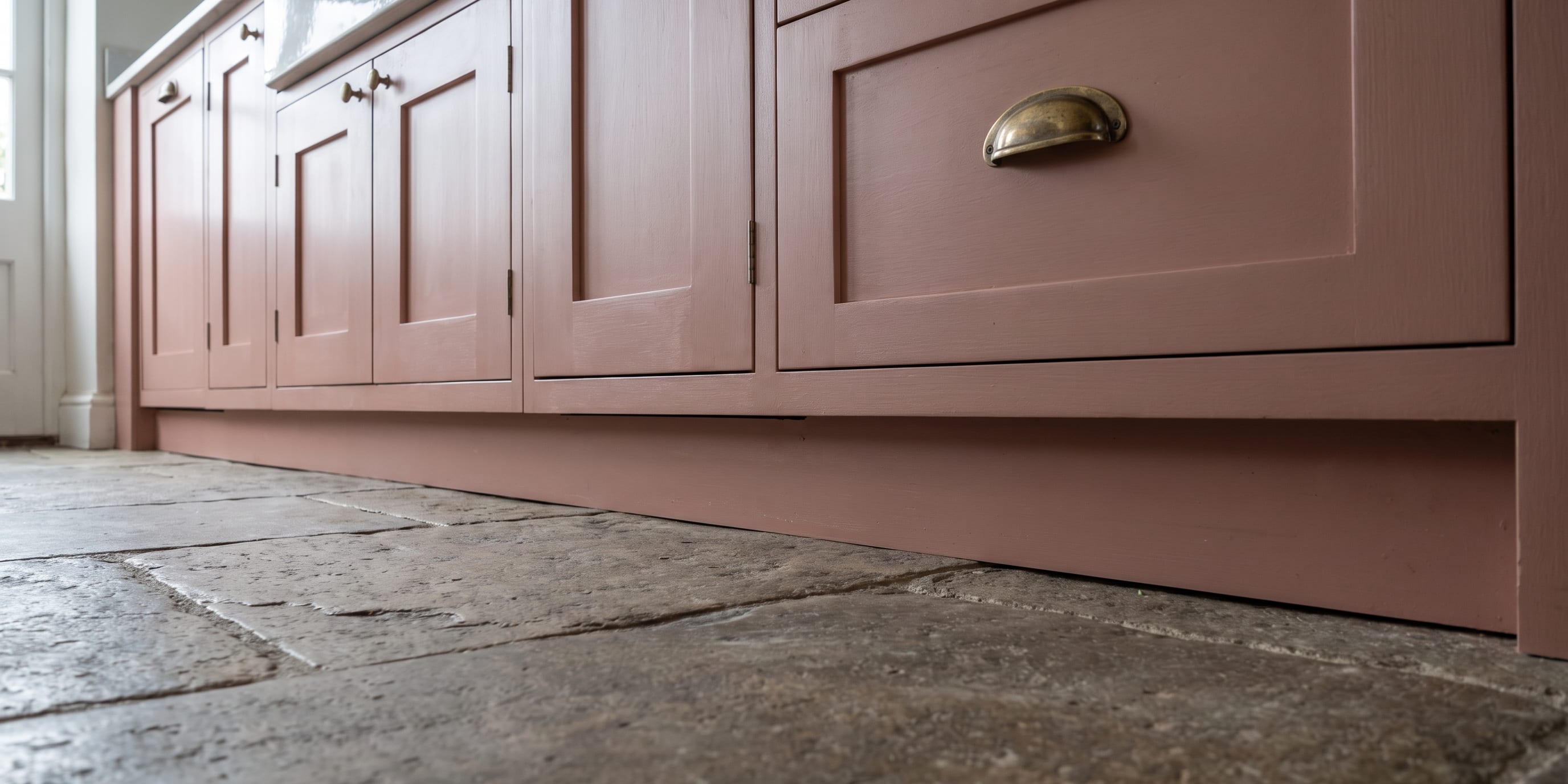
Finally, think about metalwork. Handles, taps and appliance fronts set a temperature for the room. Brass and warm bronze sit comfortably against greens, clays and deep blues. Brushed steel and matt black are more forgiving across the board.
When the colour or finish pushes you toward workshop spraying
Kitchen spraying is often done as a hybrid: doors and drawer fronts removed and sprayed in controlled conditions, carcasses, frames and end panels sprayed in situ with the room fully masked and extracted.
Certain choices tip the balance further toward the workshop. High gloss is the clearest example, because it needs dust control that no occupied home can provide. Dark, saturated colours are the next, since they reveal dust inclusion and uneven coverage far more than a soft white. Finishes requiring multiple coats with careful flatting between them also benefit from a controlled environment, as does anything where consistency across thirty door fronts matters more than convenience.
Pale, low sheen colours on sound MDF shakers are the most forgiving combination and give a sprayer the most flexibility about where the work happens.
None of this should narrow your ambitions. It simply means the conversation about colour and the conversation about method belong together. If you have a colour in mind, or a worktop you are building the scheme around, it is worth discussing it alongside the practicalities of your existing doors. You can see how that process works through Chameleon’s kitchen respraying service, where the material, the colour and the finish are assessed as one decision rather than three.
Questions
Frequently Asked Questions
Can any kitchen colour be matched for a respray?
Most can. Coatings used for kitchen spraying are usually tinted to order, so RAL and NCS codes are straightforward and branded chart colours can normally be matched closely. The honest caveat is that a match from a small paper chip is an interpretation, and sheen level changes how a colour reads, so ask for a sprayed sample in your chosen finish before committing.
Which sheen is best for kitchen doors?
Satin and low sheen eggshell finishes suit most kitchens because they wipe clean without flashing up every fingerprint. Dead matt looks superb but can burnish where it is cleaned repeatedly, and full gloss is the least forgiving of any imperfection in the door beneath it.
Does a two-tone kitchen cost more to spray?
Usually, yes. Each extra colour means separate masking, separate coating batches and separate cure cycles rather than one continuous run. The increase depends on how the colour split is arranged, so it is worth discussing the layout of the scheme before the quote is finalised.
Can vinyl wrapped doors be resprayed?
Often they can, provided the wrap is intact and well adhered. Where the film is lifting, bubbling or peeling at the edges, the loose material has to be dealt with first, and on some doors replacing the fronts is the more sensible route. A sprayer should inspect the worst doors before giving an answer.
Do dark colours work on a sprayed kitchen?
They do, and they can look excellent, but dark saturated colours show surface defects, dust inclusion and coverage variation far more readily than pale ones. That tends to push the work toward controlled workshop conditions for the doors rather than spraying everything in place.