Chameleon
Respraying Kitchen Cabinets: What It Fixes and What It Can’t
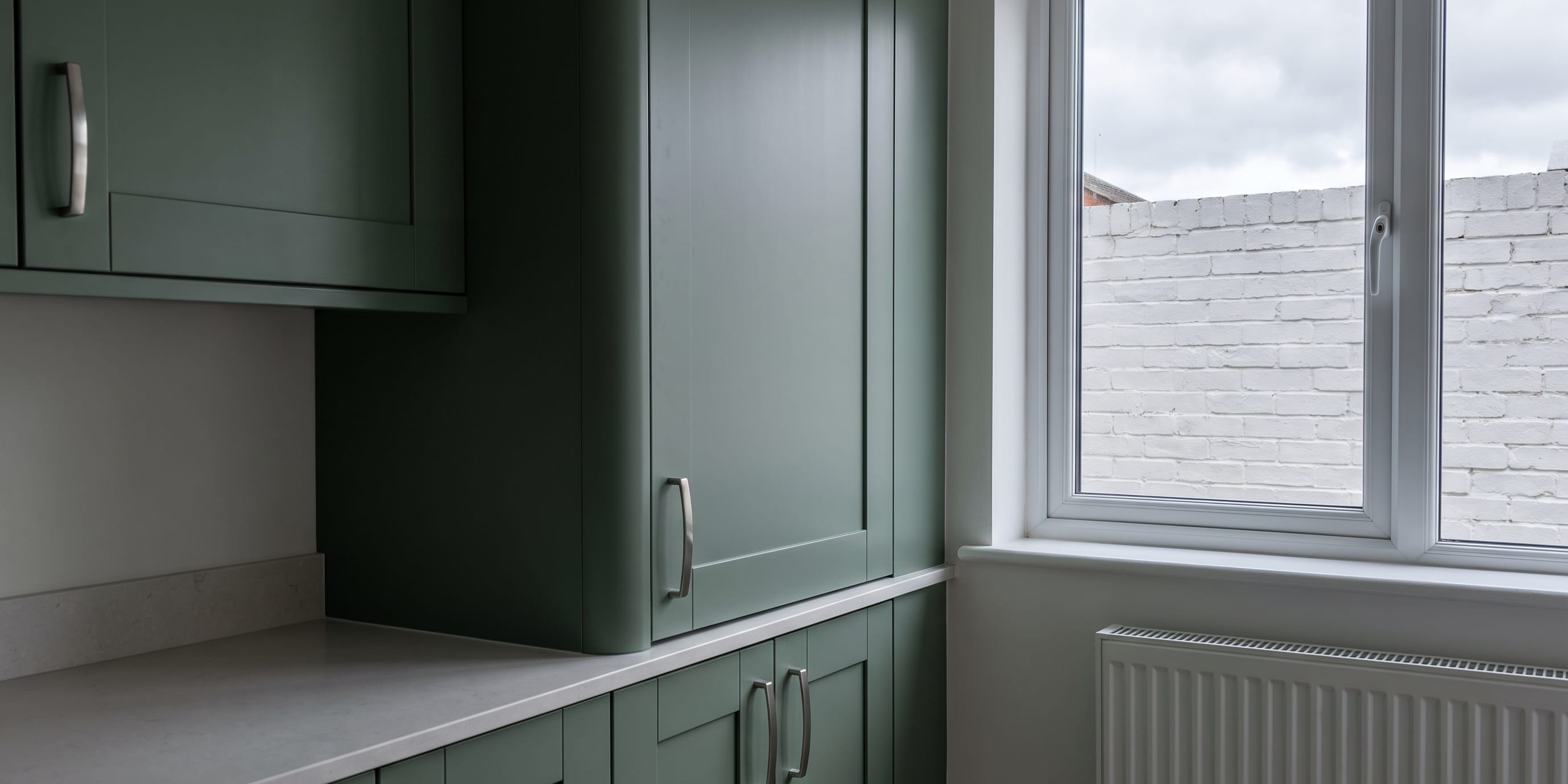
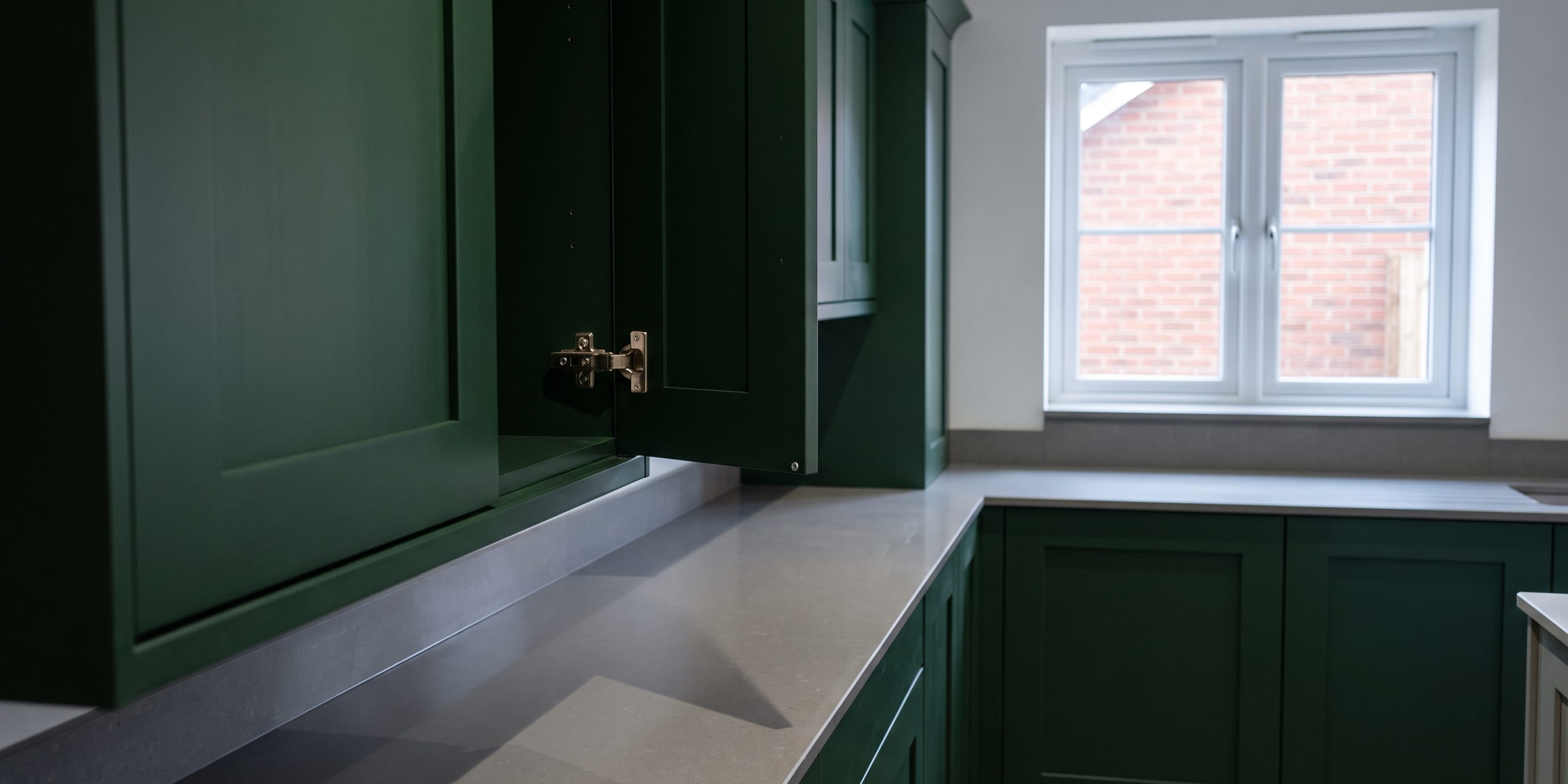
If you are reading about respraying, you have probably already decided the kitchen itself is fine. The units are solid, the worktop is sound, the layout works. It is the colour that has dated, or the doors have gone tired, or the previous owner’s choice of oak has worn out its welcome.
The question is whether spraying is the right answer for your kitchen specifically. Most of what you will find online either lists prices or sells you an aerosol can. Neither tells you whether your doors will take a finish well, how long it will hold up, or when you are better off replacing. This piece answers those questions, including the uncomfortable ones.
What respraying actually involves
Spraying a kitchen is not painting with a different tool. The process is the point.
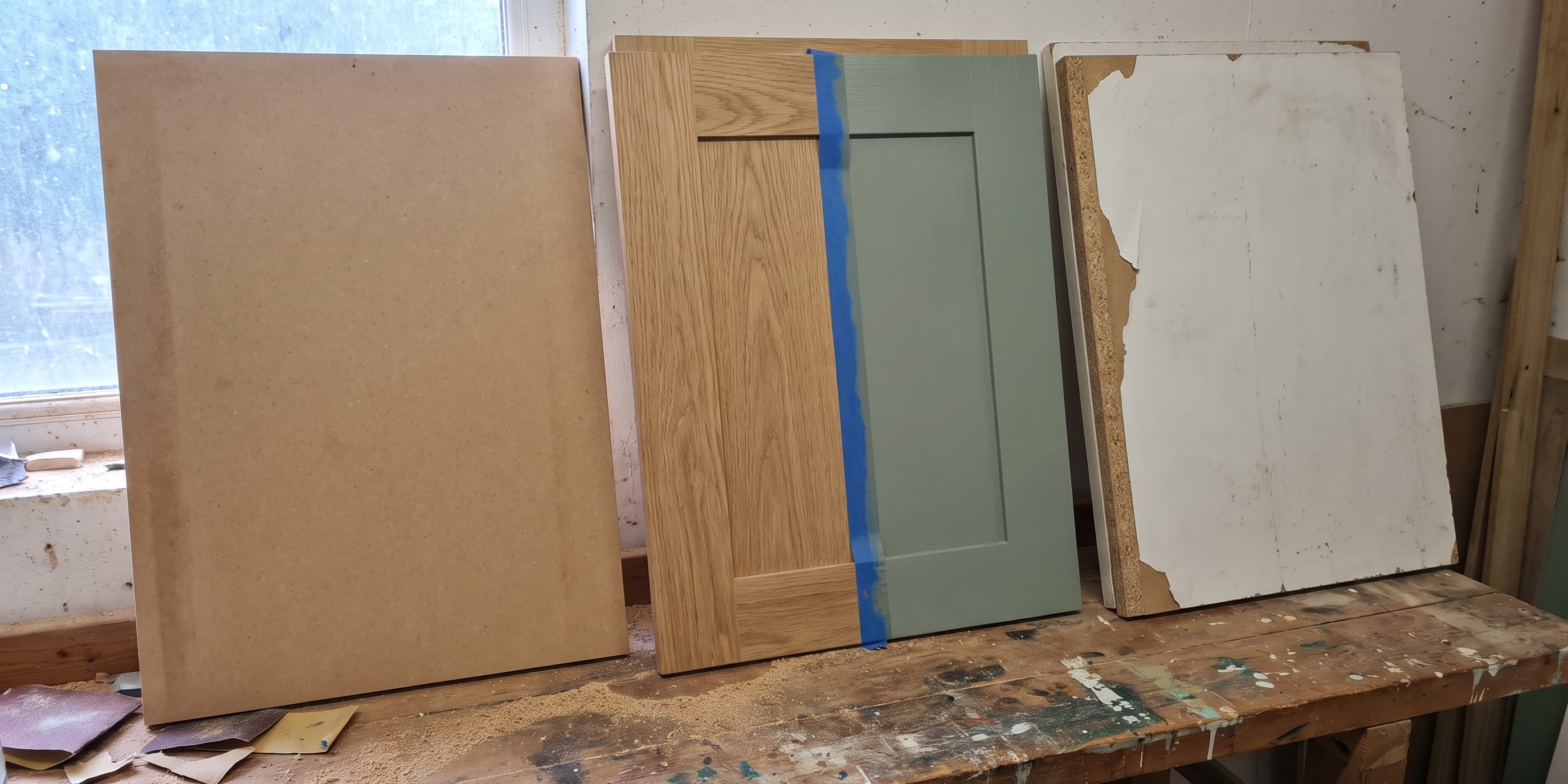
Doors and drawer fronts are removed, labelled and taken away or set up on site in a controlled area. Hinges, handles and fittings come off. Every surface is degreased, which in a working kitchen means more than a wipe with sugar soap, then abraded so the new coating has something to grip. Damage is filled and sanded flush. A primer is chosen for the substrate, because what sticks to raw MDF is not what sticks to melamine or vinyl wrap. Then two or more coats of topcoat go on, sprayed rather than brushed, with a pass of fine abrasive between coats.
The carcasses and any fixed panels are masked and sprayed in situ, with the rest of the room protected. Doors go back on once the coating has cured enough to handle, and reach full hardness over the following days or weeks depending on the product.
Everything that determines the quality of the result happens before the colour goes on. That is worth remembering when you compare quotes.
How long a sprayed finish really lasts
Nobody can give you an honest single number: it depends on the coating specified, the quality of the preparation, and how hard your household uses the kitchen. What can be described is how the finish behaves over time.
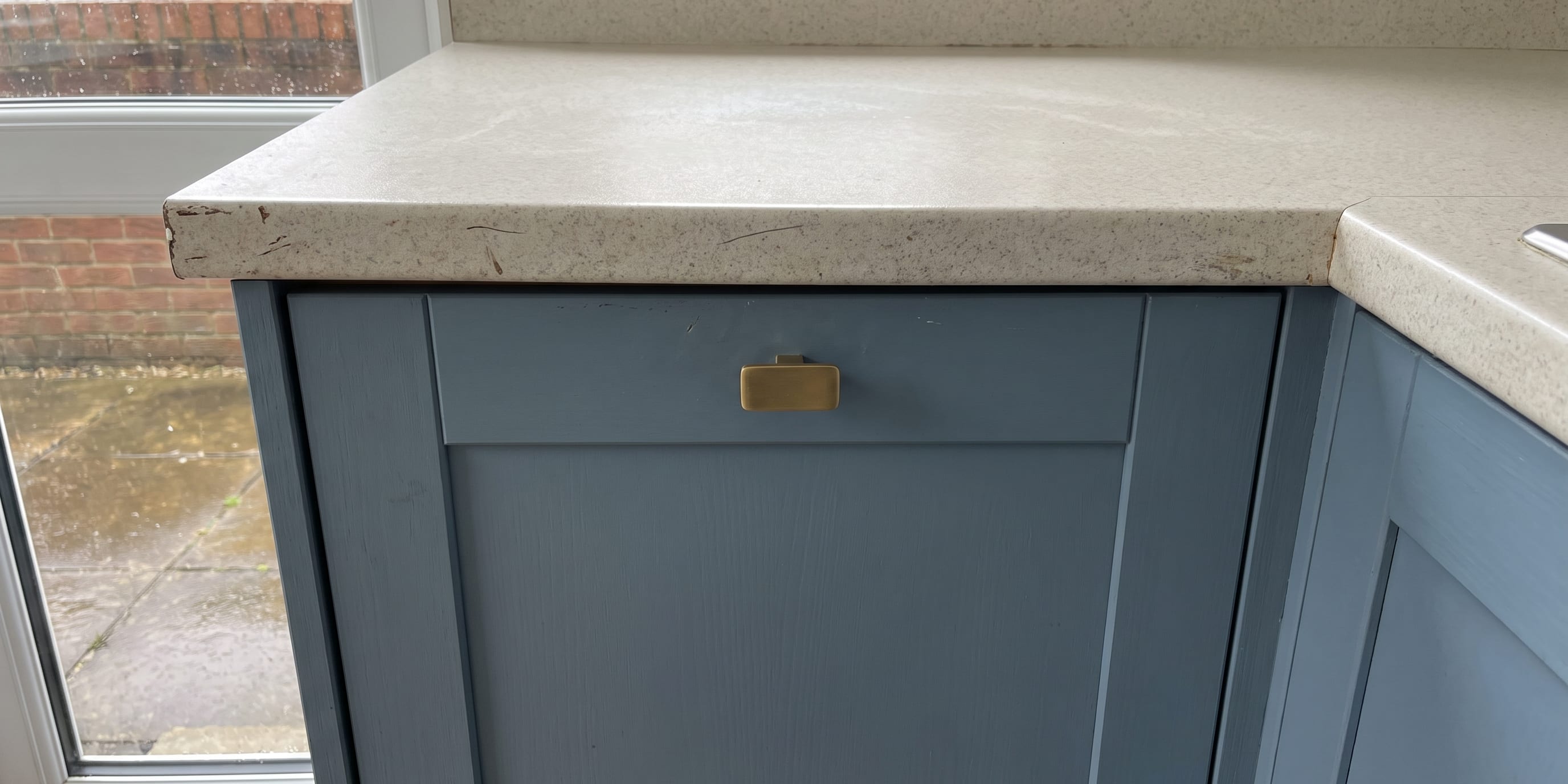
A correctly prepared, correctly specified kitchen finish does not fail all at once. It wears. The wear shows up in predictable places: around handles where fingernails and rings catch, on the face of the cabinet beside the sink where water sits, on the door nearest the hob where heat and grease work on it, and on the kick boards where shoes and the vacuum make contact. Everything else, the wall units, the tall larder, the doors nobody touches, tends to look much as it did on day one for a long time.
That pattern is good news. It means attention, when it is eventually needed, usually means touching in a handful of areas or respraying one or two doors, not starting the whole kitchen again. It also means the way you treat the kitchen matters. Wiping spills rather than letting them dry on, avoiding abrasive cream cleaners and bleach based sprays on cabinet faces, and not hanging a tea towel on the oven door handle where it rubs all day will all extend the life of the finish noticeably.
Be wary of anyone quoting a precise lifespan without seeing your doors. The more useful question is what their guarantee covers, how long it runs, and what would void it. That tells you what they believe about their own work.
Which kitchens are good candidates, and which are not
Most kitchens can be sprayed. The exceptions are worth taking seriously, because a coating applied over an unsound substrate will fail no matter how good the spraying is.
Good candidates. Solid timber doors, whether stained, varnished or painted, take a sprayed finish very well once the old coating is properly keyed or stripped. Factory painted and sprayed MDF doors are ideal, as they were coated in much the same way originally. Melamine faced and laminate doors can be sprayed successfully with the right adhesion primer. Vinyl wrapped (foil) doors are also fine, provided the wrap is still fully bonded.
Doors that need a closer look. Vinyl wrap that is lifting at the edges or peeling back around the oven housing is the most common problem in British kitchens. A small amount of lifting at one corner can sometimes be dealt with. Wrap that is bubbling or releasing across a face cannot be reliably sprayed, because the coating bonds to the wrap, not to the board beneath, and will come away with it. In those cases replacing the affected doors and spraying everything to match is usually the sensible route.
Where spraying is the wrong answer. Chipboard carcasses that have swollen from a leak under the sink, with the characteristic puffy, crumbling edge, need replacing rather than coating. Doors with soft or blown edges from steam damage above a kettle or dishwasher are in the same category. Heavily built up layers of old household paint, especially where the previous coats are flaking or where nobody knows what product was used, create an unpredictable base: the new coating may be sound while the layer beneath it is not. Years of accumulated cooking grease in a kitchen that has not been deep cleaned is a preparation problem rather than a dealbreaker, but it is a real one, and a sprayer who skips the degreasing stage is storing up an adhesion failure.
A proper survey should involve someone opening doors, checking edges, pressing on suspect areas and looking under the sink. If a quote arrives without any of that, it is a price, not an assessment.
Professional spraying versus a DIY aerosol
People who have used aerosol cabinet paint on a bathroom cupboard reasonably ask why a kitchen costs what it does. The honest answer is that the difference is not mainly the paint.
Atomisation and film build. Professional spray equipment breaks the coating into a far finer, more consistent spray pattern and lays down an even film across a whole door face in a single controlled pass. Aerosols deliver a narrower, less consistent fan. On a large flat door that shows as banding, mottling and variation in sheen that only becomes obvious once the light hits it from the side.
Coating chemistry. Trade kitchen coatings are specified for the job: adhesion to the particular substrate, resistance to kitchen grease and cleaning products, and a cure that hardens over time into something you can wipe down daily. Aerosol products are formulated for convenience and small areas. They rarely reach the same hardness.
Preparation and environment. The visible difference between a professional job and a competent DIY one is usually dust and overspray rather than colour. Controlled conditions, proper extraction, thorough masking and clean handling between coats are what produce a surface with no nibs in it and no fine haze on the worktop, the taps, the hinges or the floor.
Edges and detail. Shaker doors, beaded panels and the undersides of handles are where a job is given away. Spraying gets coating into the profile evenly. Working around a kitchen with aerosols tends to leave heavy build in the corners of panels and thin coverage on the edges, which is exactly where wear starts.
DIY spraying can produce an acceptable result on a utility cupboard. On a kitchen you look at every day under downlights, the gap is substantial.
Respray or replace: the decisions that actually matter
Price comparison is the easy part, and it is covered in detail in our guide to kitchen respray cost. The harder decisions are these.
Does the layout still work? A respray changes colour and finish. It does not move the sink, add a run of drawers, create space for a dishwasher or fix the cupboard you cannot reach past the fridge. If your frustration with the kitchen is about how it functions, spraying will give you a smarter looking version of the same problem, and the frustration will come back within months.
How is the kitchen used? A household of four with teenagers, a dog and a kitchen that doubles as a homework table puts a different load on a finish than a couple who cook at weekends. Spraying suits both, but the busier household should expect touch ups sooner and should discuss coating specification rather than simply picking a colour.
How long are you staying? If you are planning to move within a couple of years, spraying usually makes far more sense than replacement. It presents well, costs a fraction of a new kitchen and does not tie up the house for weeks. If this is the kitchen you intend to use for the next fifteen years and the carcasses are already marginal, you may be deferring a decision rather than making one.
What condition is the hardware in? Hinges, runners and soft close mechanisms wear out independently of the doors. Replacing them while the doors are off is straightforward and cheap compared with doing it later. A kitchen with a beautiful new finish and drawers that stick is an odd result.
What is the disruption tolerance? This one often decides it. A respray typically keeps the kitchen broadly usable, with doors off for a period rather than the whole room stripped out. A replacement means no kitchen for a stretch, plus plastering, flooring and electrical work that may not have been in the original budget.
Vetting a specialist beyond the photo gallery
Every website has a portfolio. Photographs are taken in favourable light, usually on the day, often at an angle that flatters the finish. A portfolio is a starting point, not evidence. Here is what to ask for instead.
Work that has aged. Ask whether they can show or describe kitchens sprayed a few years ago rather than a few weeks ago. How a finish looks after a thousand meals is the only test that matters.
The specification, in writing. A quote should state the preparation steps, the primer system and the topcoat being used, not simply "two coats of paint". If a firm will not tell you what is going on your kitchen, that is information in itself.
How they handle the awkward parts. Ask what they do about lifting foil edges, how they mask worktops and appliances, where the doors are sprayed, and how they deal with dust. Confident, specific answers come from people who have done it often.
Guarantee terms. Length, what is covered, what is excluded, and what the process is for making a claim. Read the exclusions.
Insurance and references. Public liability cover is basic, and a specialist should be able to point you towards independent reviews rather than only testimonials on their own site.
If the finish or colour is not right: snagging done properly
This deserves to be settled before anyone picks up a spray gun, not after.
Colour is the most common source of disappointment, and it is almost always avoidable. Ask for sprayed sample doors or substantial sprayed swatches in the actual coating, not printed colour cards, and look at them in your own kitchen: in daylight, in the evening under your own lighting, against your worktop and your flooring. Colours shift dramatically between a showroom and a north facing room with warm LEDs. Once you have signed off a sample, both sides know what was agreed.
A finish defect is different from a change of mind. Runs, sags, orange peel texture, visible overspray on adjacent surfaces, patchy sheen, nibs from dust in the coating, or coating that is not bonded properly are workmanship issues. A professional firm should inspect them, explain what caused them and put them right at its own cost, which may mean flatting back and recoating the affected doors.
What a fair snagging process looks like: a walk round and sign off at completion while the sprayer is still there, in good daylight, with both of you looking at the doors from an angle rather than straight on. Any snags noted in writing at that point, with an agreed date for returning to deal with them. A clear statement of how long the coating needs before it reaches full hardness, and what to avoid during that period, because damage caused by cleaning a fresh finish too aggressively is not the sprayer’s fault and a good firm will have warned you. Then a defined route for anything that appears later within the guarantee period.
Agreeing all of that up front is not a sign of distrust. It is how both parties avoid an argument neither wants.
Where this leaves you
Respraying fixes colour, dated finishes, surface damage and a kitchen that looks older than it is. It does not fix water damaged carcasses, failing foil wrap, worn out hinges or a layout that never worked. The decision is rarely about price alone, and anyone who makes it about price alone is not helping you.
If your units are sound and your layout still suits how you live, spraying is very often the best value decision available in a British home. If you would like an honest assessment of whether your kitchen is a good candidate, including a frank answer if it is not, have a look at Chameleon’s kitchen respraying service and get in touch to arrange a survey.
Questions
Frequently Asked Questions
Can any kitchen cabinet be resprayed?
Most solid timber, MDF, vinyl wrapped and factory painted doors can be resprayed once they are sound. The usual disqualifiers are swollen or crumbling chipboard carcasses, foil wrap that is lifting across large areas, and doors that have already been painted several times with an unknown product. A sprayer should assess the doors in person before quoting.
How long does a sprayed kitchen finish last?
A properly prepared and correctly specified finish should last for years rather than months, and in a normally used kitchen it tends to wear at touchpoints first: around handles, beside the sink, and on the cabinet nearest the hob. Those areas can usually be touched in or a single door resprayed without redoing the whole kitchen.
Is respraying cheaper than a new kitchen?
Almost always, because you are keeping the carcasses, worktops, appliances and layout. The more useful question is whether the existing layout and storage still work for you. If they do not, spending on a finish will not fix that. Cost alone should not decide it.
What if I do not like the colour once it is sprayed?
Ask about sample doors or sprayed colour swatches before work starts, and view them in your own kitchen light at different times of day. Signed off samples protect both sides. If a finish is genuinely defective rather than simply not to taste, a professional firm should put it right under its guarantee.