Chameleon
Kitchen Respraying Explained: Scope, Lifespan, Care
Kitchen respraying sits in an awkward gap in most people’s heads. It is not a new kitchen, and it is clearly more than a coat of paint from a tin, but very little written about it explains exactly where the boundaries fall. Most articles jump straight to price, or straight to the mechanics of taking doors off. The questions in between tend to go unanswered: what does it actually change, how long will it hold up, and what aftercare does it need once the decorator has left?
This piece answers those three questions plainly, so you can decide whether respraying is the right route before anyone measures anything.
What kitchen respraying actually is
Respraying means stripping the existing kitchen back to a sound, keyed surface, sealing and priming it appropriately for the material underneath, then applying a specialist cabinet paint in thin, even coats using spray equipment rather than a brush or roller.
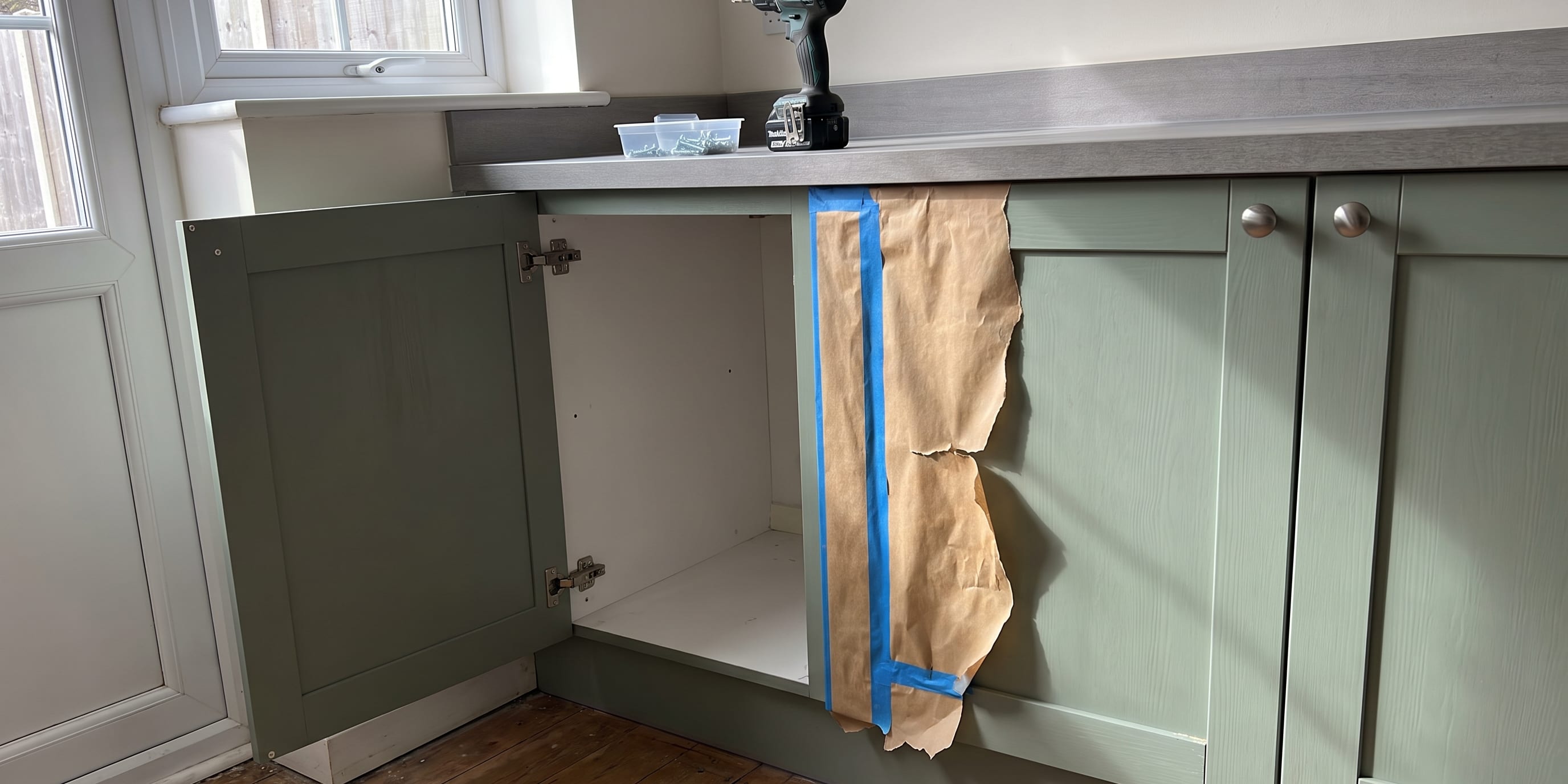
The doors and drawer fronts usually come off and are sprayed in controlled conditions. The carcasses, end panels, plinths, cornice and any fixed elements are prepared and sprayed in situ, with the rest of the room masked off. When the doors go back on, the whole kitchen reads as one colour and one finish, because it is.
The finish itself is a paint system, not a single product. Degrease, sand, prime, spray, sometimes a further coat. Each stage exists for a reason, and skipping any of them is where cheap jobs fail six months later.
What respraying changes, and what it leaves completely alone
This is the distinction that matters most, because it decides whether respraying can solve your problem at all.
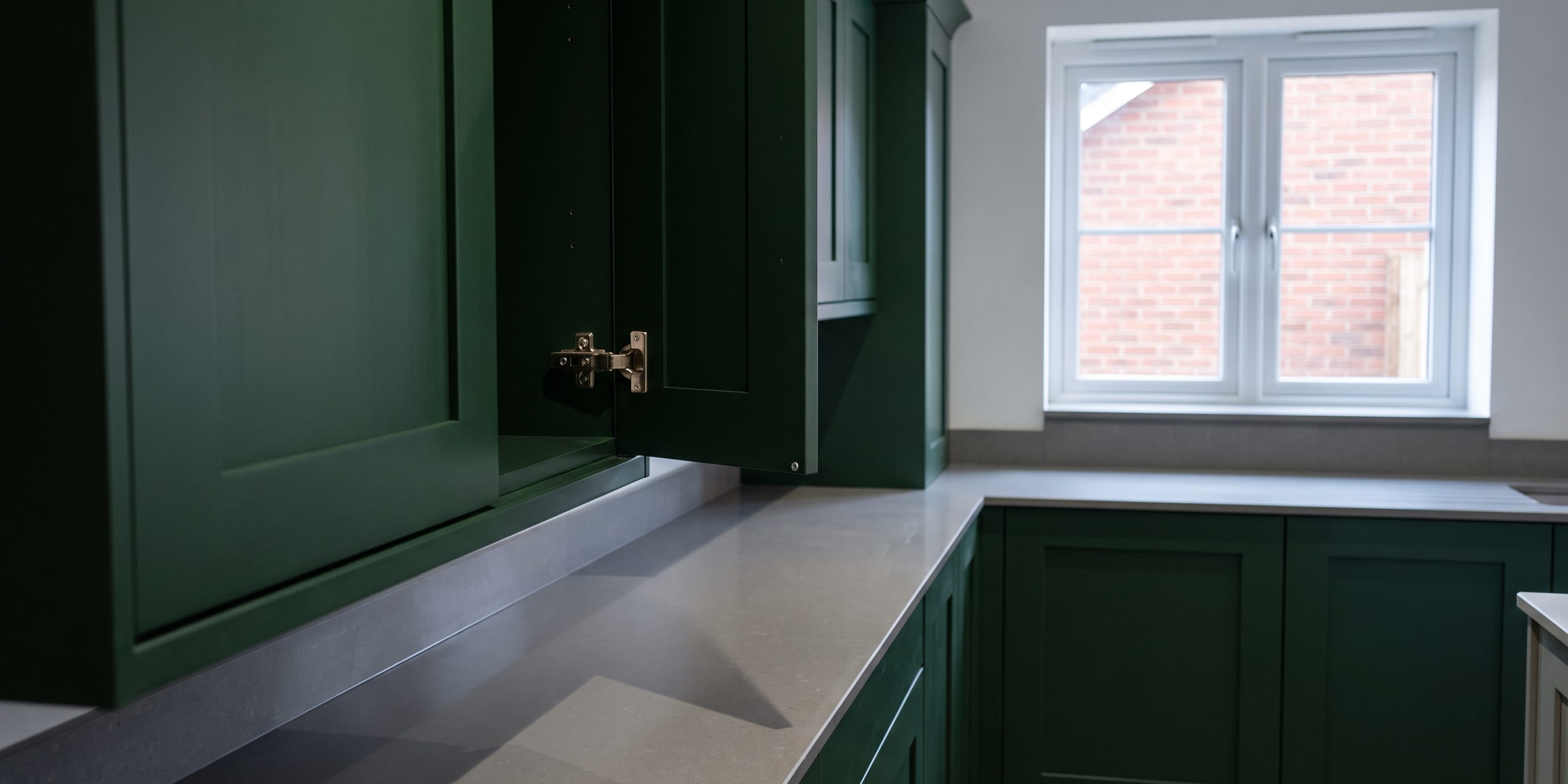
It changes the colour and the finish. A tired oak kitchen can become a soft grey. A dated high-gloss cream can become a flat matt green. You can change sheen level as well as colour, so a glossy kitchen can be made matt, or a flat one given a subtle satin. Handles can be swapped at the same time, which shifts the look further than people expect.
It changes the perceived condition. Small chips, scuffs, worn edges and the general dullness that comes from years of wiping down all disappear under a properly prepared and sprayed finish.
It does not change the layout. Units stay where they are. If the fridge is awkwardly placed or you hate reaching over the hob to get to the sink, respraying will not help. That is a refit.
It does not change the worktops. Worktops are a separate replacement job. Plenty of people replace worktops and respray at the same time, and the combination transforms a room, but the spraying itself does not touch them.
It does not change appliances, sinks or taps. Those are swapped independently if you want them swapped.
It does not rebuild the carcasses. If the boxes are sagging, water-damaged or coming apart, paint will not fix that. Respraying assumes the underlying kitchen is sound. A good decorator will tell you honestly if it is not.
It does not change door styles. Shaker stays shaker. Slab stays slab. If you dislike the profile of the doors themselves, colour will only take you so far.
The short version: respraying is a cosmetic transformation of a structurally sound kitchen. Where the bones are good and the look is tired, it is an extremely efficient way to spend money. Where the bones are wrong, it is the wrong tool. If you are weighing that up against the cost of new doors or a full refit, our guide to kitchen respray cost sets out what drives the figure.
How long a sprayed finish realistically lasts
Kitchens are the most demanding room in the house for any painted surface. Heat, steam, grease, fingerprints, cleaning chemicals and constant physical contact all work against the finish. A kitchen paint system has to be specified for that, and professional cabinet coatings are.
Expect the finish from a well-executed respray to be measured in years, not months, and to behave much like the factory finish it replaced: hard, wipeable and resistant to everyday knocks. It is not indestructible. Nothing in a kitchen is. A dropped pan will chip a sprayed door just as it would chip a new one.
Several things shorten the life of a sprayed finish:
- Poor preparation. By far the biggest factor. Paint applied over grease, silicone residue or an unkeyed gloss surface will peel regardless of how good the topcoat is. This is why the prep stage takes longer than the spraying.
- The wrong system for the substrate. Vinyl-wrapped doors, raw MDF, solid timber and previously painted surfaces all need different priming. Getting this wrong causes adhesion failure later.
- Standing moisture. The most common failure point is around the sink and dishwasher, where water sits along a bottom edge and works into a joint. Wipe spills rather than leaving them.
- Steam with nowhere to go. A kettle positioned under a wall unit, or a hob used without extraction, drives repeated moisture and grease into the same small area.
- Strong, direct sunlight. Prolonged UV exposure can shift the tone of a colour over time. Deep and highly saturated colours show this more readily than neutrals.
- Harsh cleaning products. Covered below, because aftercare is the one factor entirely within your control.
Things that extend it: sensible cleaning habits, dealing with spills promptly, using extraction while cooking, and touching up small chips before they become a route for moisture.
Sprayed finish versus brush and roller
People often ask whether they could achieve the same thing themselves with a tin of cupboard paint, a brush and a weekend. It is worth being honest about the difference, because it is not only about effort.
Smoothness. Spraying atomises the paint and lays it down as a continuous film. There are no brush marks, no roller stipple and no lap lines where wet edges met. On a flat slab door, this difference is obvious at any angle. On a shaker door, brushwork tends to pool in the internal corners of the frame, which shows up as a slightly thicker, glossier line exactly where the eye goes.
Durability. Professional cabinet systems are formulated to cure to a hard film and are applied in controlled thin coats, which is how they achieve that hardness. Many brush-applied consumer cupboard paints remain comparatively soft, which is why they mark under fingernails and pick up scuffs around handles within months.
Coverage and consistency. Spraying reaches the edges, the profiles and the awkward returns of a door evenly. Brushwork on a detailed door almost always leaves the recesses slightly heavier and the raised faces slightly thinner, and the colour reads unevenly as a result.
Consistency across the room. Because the doors and carcasses are all sprayed within the same process, the whole kitchen matches. A DIY job frequently ends up with doors that look noticeably different from the fixed panels sprayed or brushed in place.
DIY painting is not worthless. On a rental, a temporary fix or a utility cupboard, it can be perfectly sensible. But it is a different product to a sprayed kitchen, and it is fairer to think of it that way than to treat one as a cheaper version of the other.
Aftercare: looking after a sprayed kitchen
A new finish needs a short settling-in period, and aftercare starts immediately. Paint is touch dry long before it is fully cured, and during that initial period the surface is at its most vulnerable. Your decorator will tell you how long to be gentle with it. In practice that means wiping lightly rather than scrubbing, avoiding cleaning products entirely for the first stretch, and being careful about sticking anything to the surface.
Once cured, the aftercare rules are simple.
Do:
- Clean with warm water and a small amount of washing-up liquid on a soft microfibre cloth.
- Dry the surface afterwards rather than leaving it damp, particularly along bottom edges near the sink and dishwasher.
- Wipe splashes and spills when they happen, especially anything acidic, oily or strongly coloured.
- Run the extractor while cooking and open a window when steam builds up.
- Keep the kettle out from directly beneath a wall unit if you can.
Avoid:
- Bleach, oven cleaner, ammonia-based sprays and anything labelled as a heavy-duty degreaser.
- Cream cleaners, scouring powders and anything gritty.
- Melamine foam pads, sold as magic erasers. They work by abrading the surface and will dull a sheen finish quickly.
- Scouring pads and the rough side of a washing-up sponge.
- Leaving tea towels draped over cupboard doors to dry, which holds moisture against the surface.
For chips and knocks, ask for a small quantity of the finish colour to be left with you. Touching in a chip early is quick, keeps water out of the substrate and saves a much larger repair later.
Is respraying right for your kitchen?
If the units are solid, the layout works and the problem is purely that the colour is dated or the surfaces look tired, respraying is one of the most cost-effective changes you can make to a house. If the carcasses are failing, the doors are delaminating or the layout is genuinely wrong, it is not the answer, and any decorator worth hiring will say so before quoting.
The honest middle ground is worth mentioning too: plenty of kitchens have one or two doors past saving alongside twenty that are fine. Replacing the failed ones and spraying everything together is a common and perfectly sound approach.
If you would like an assessment of whether your kitchen is a good candidate, and a clear explanation of what the work would involve in your home, take a look at Chameleon’s kitchen respraying service and get in touch for a no-obligation quotation.
Questions
Frequently Asked Questions
Does kitchen respraying change the layout of my kitchen?
No. Respraying changes the colour and finish of the doors, drawer fronts, end panels and visible cabinetry. The layout, carcasses, hinges, worktops and appliances stay exactly where they are.
Can any kitchen be resprayed?
Most can, provided the doors and carcasses are structurally sound. Vinyl-wrapped doors that are peeling, or MDF that has swollen with water damage, may need replacing rather than refinishing. A proper inspection before quoting is the only reliable way to know.
How long does a sprayed kitchen finish last?
A professionally applied cabinet paint system is built to cope with daily kitchen use for years rather than months. Lifespan depends on the products used, how hard the kitchen is used, exposure to strong sunlight and how well spills and steam are managed.
Is spraying really better than painting the kitchen myself?
For smoothness and durability, yes. Spraying lays down an even film with no brush marks or roller texture, and professional systems are formulated to cure hard. A brush and roller finish can look acceptable from a distance but rarely matches a sprayed surface up close.
What aftercare does a sprayed kitchen need?
Warm water with a little washing-up liquid on a soft cloth, dried off afterwards. Avoid bleach, oven cleaner, scouring cream, magic sponges and anything abrasive, as these will dull or cut through the finish.