Chameleon
Kitchen Worktop Respray: Can You, or Should You Replace?
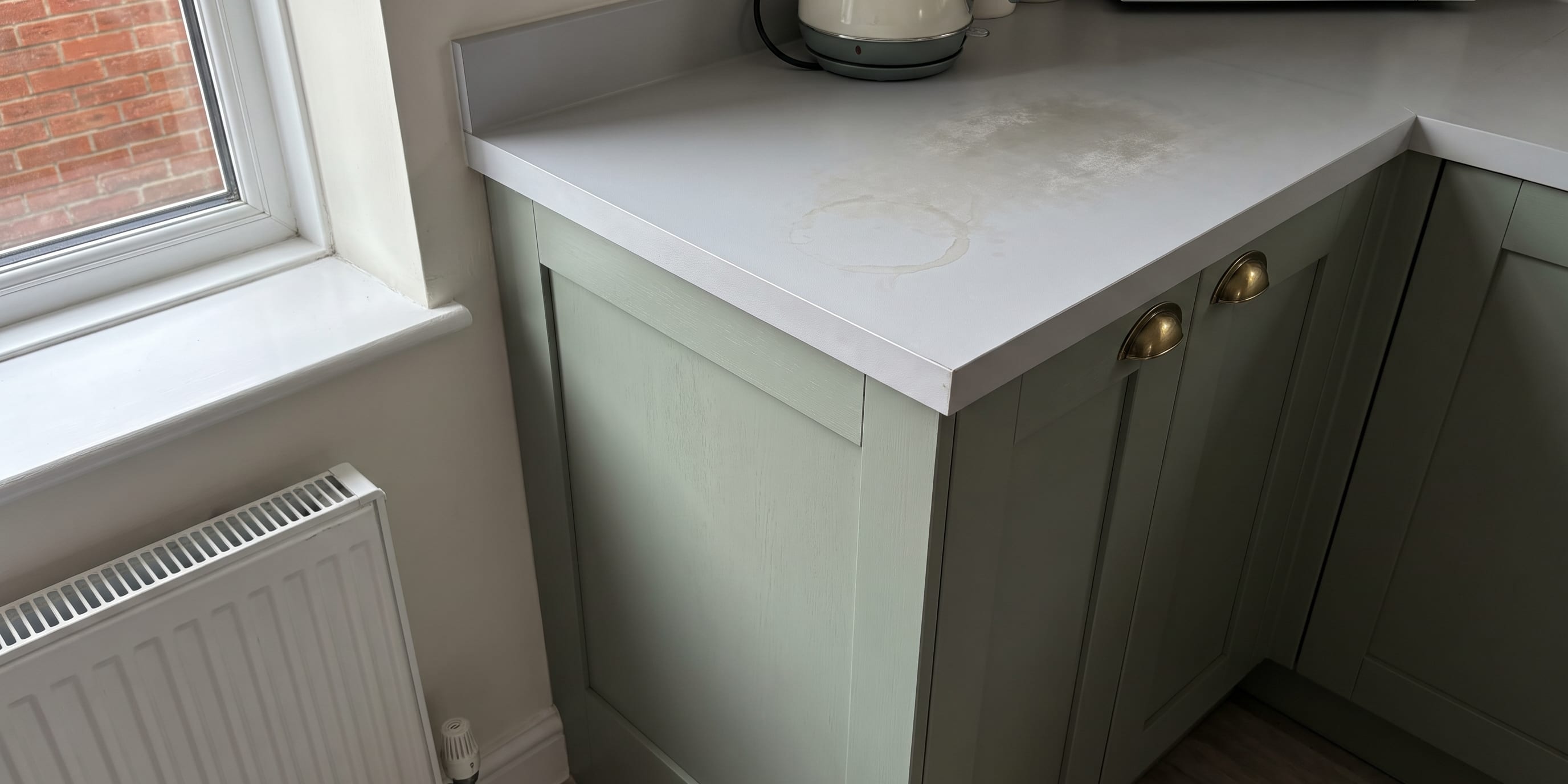
Kitchen doors and kitchen worktops are often sold as the same job. They are not. A door is a vertical surface that gets touched by fingers, bumped by a hip and wiped down once a week. A worktop is a horizontal surface that gets hot pans, wet glasses, knife blades, spilled bleach, turmeric, red wine and a standing puddle around the sink that nobody notices until the kettle is moved.
A kitchen worktop respray is a real option, and in the right kitchen it is a good one. But it has limits that a door respray does not, and those limits are worth understanding before you book rather than after. This piece sets out which worktops are genuine candidates, what a sprayed finish can and cannot survive, how the cost compares with replacement, and when replacement is simply the better decision.
Which worktop materials are realistic candidates
Spraying is an adhesion problem first and a colour problem second. The question is never "can paint go on this?" but "will this coating stay bonded to this substrate under heat, moisture and abrasion for years?"
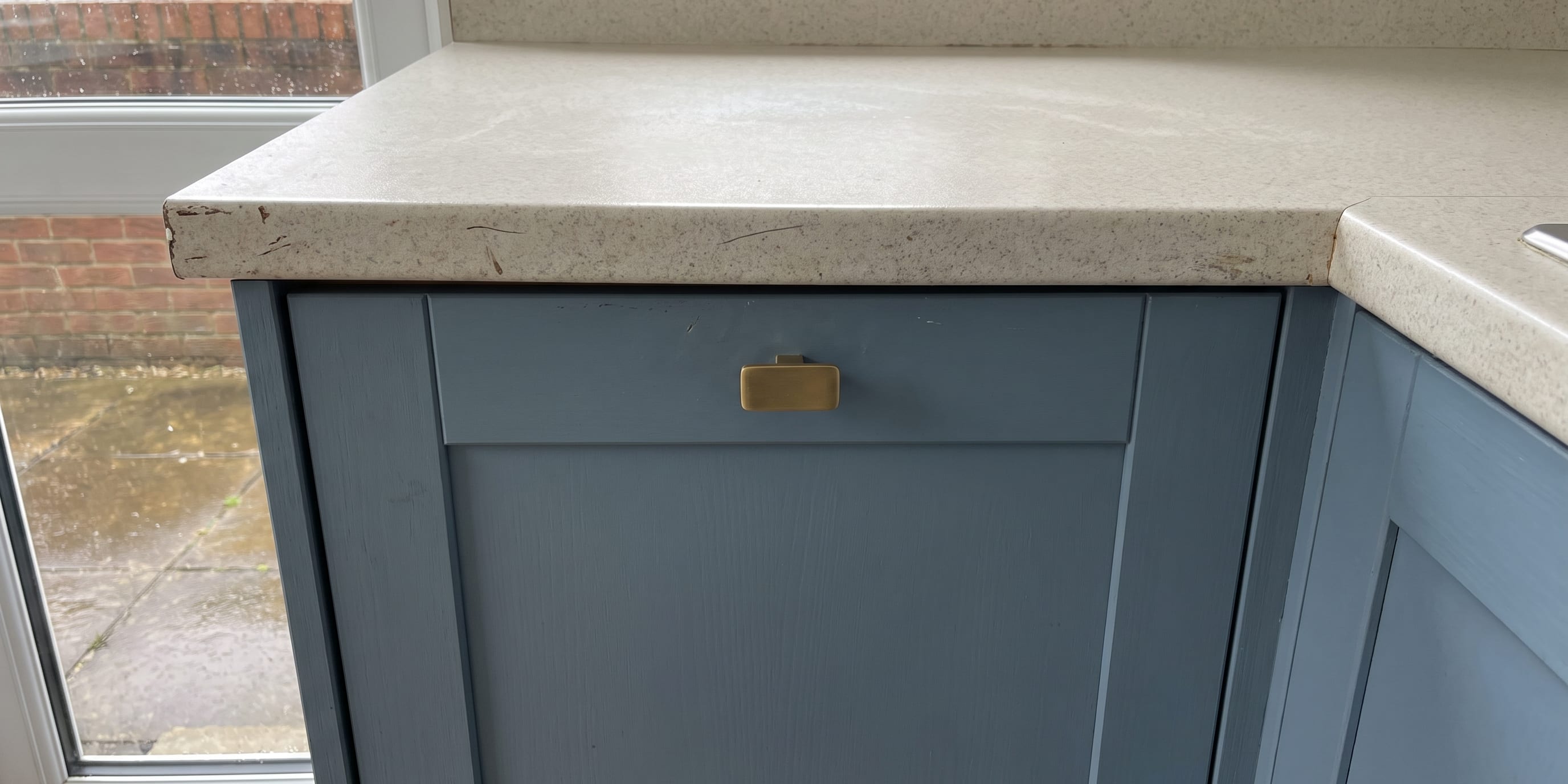
Laminate over a chipboard or MDF core. This is the most common candidate and usually the most straightforward, provided the worktop is structurally sound. The laminate surface is non-porous and needs thorough degreasing, careful abrading and an adhesion primer suited to the substrate. The decorative layer itself is not the problem. The core underneath is.
Solid timber. Possible, but it brings complications. Timber moves with humidity, and oiled worktops carry oil deep into the grain that has to be removed properly before any coating will bond. Expect more preparation, and expect the sprayer to be cautious about joints and end grain.
Solid surface materials such as Corian. Technically sprayable, but often the wrong answer. Solid surface is homogeneous through its thickness, which means scratches and dull patches can frequently be sanded and repolished back to a usable finish. Repolishing is normally the sensible first step before considering a coating.
Stainless steel. Sprayable with the correct etch or adhesion primer, though it is an unusual request and worth questioning. Stainless is already doing the job a coating would be asked to do.
Granite and quartz. Generally not. These surfaces are dense, polished and non-porous, and the whole point of them is a hardness that a coating cannot match. Putting a film over stone usually means swapping a durable surface for a less durable one. If the stone is dull or stained, a stone specialist is the better call.
Tiled worktops. No. The grout lines are porous, they move, they hold moisture, and they telegraph through any coating. A tiled worktop that you no longer want is a replacement job.
Any worktop with a swollen core. If the chipboard around the sink or dishwasher has blown, the edge has lifted, or the surface feels soft when pressed, spraying is pointless. The damage is below the surface and a coating will not reverse it.
The abuse a worktop takes that a door never does
This is the part the sales pages tend to skip.
Heat. A pan straight off the hob can mark a sprayed finish. It can also affect the substrate underneath. No domestic spray coating is a heatproof surface in the way a stone or solid laminate worktop effectively is. Trivets stop being optional.
Blades. A knife will cut through any coating. There is no finish that survives direct chopping. Boards become mandatory, not advisable.
Standing water. The weak points are the sink cut-out, the dishwasher run, the joints and the rear edge where it meets the upstand or tiles. Water does not attack a well cured coating so much as find the gap at its edges and get into the core. How a sprayer treats the cut-out edges and reseals the silicone matters more than the colour you choose.
Chemicals. Oven cleaner, thick bleach, limescale remover and drain products are all aggressive, and all of them end up on worktops. Strong pigments like turmeric and beetroot stain many finishes if they are left to sit.
Abrasion. Appliances slid rather than lifted, bowls dragged, grit under a chopping board. Horizontal surfaces collect abrasive dirt in a way vertical surfaces never do.
What this means practically is that a worktop needs a tougher coating specification than the doors, a longer and more disciplined cure period, and an honest conversation about how your household actually uses the kitchen. Touch dry and fully cured are very different states. A coating that feels dry in hours may need considerably longer before it reaches its full hardness and chemical resistance, and the first days of use are when most damage happens.
It is also worth saying plainly: a sprayed worktop is a maintained surface. Used with boards and trivets, wiped dry around the sink, it can look excellent for years. Used as a cutting board and a pan rest, it will look tired quickly. That is not a quality issue. It is physics.
Spraying versus replacing: the honest comparison
Spraying usually costs less than replacing, but the gap is not always as wide as people assume, and the reason is that replacement is rarely just the cost of the worktop.
Replacing brings templating, removal of the old surface, disconnection and refitting of the sink, taps and hob, new upstands or splashback work, and frequently damage to tiling or plaster that needs making good afterwards. Those costs attach to a cheap laminate worktop just as firmly as to an expensive one, which is why budget replacement is less of a bargain than the worktop price tag suggests.
Against that, a new worktop gives you a factory surface engineered for direct daily use, with no special care instructions and a known lifespan. A sprayed worktop gives you a transformed appearance at lower cost and far less disruption, with care requirements attached.
The two sit on different sides of a simple question. If you want a surface you do not have to think about, replace. If you want a surface that looks right and you are willing to use boards and trivets, spraying is a sensible, cost-effective choice. For how worktop work sits within the overall numbers, our guide to kitchen respray cost breaks down what drives the price of a full kitchen project.
One genuine advantage of a sprayed finish is repairability. A damaged laminate worktop is damaged permanently. A sprayed surface can often be spot repaired or recoated in future, which changes how you think about its lifespan.
How it fits alongside a door and drawer respray
Most worktop enquiries come attached to a wider kitchen project, and the sequencing matters.
Doors and drawer fronts are usually removed and sprayed off site or in a controlled area. A worktop is fixed in place, so it is an in situ job, which means masking the whole kitchen, protecting the floor, extracting dust and controlling overspray in a room full of appliances. It takes longer and it puts the kitchen out of action for longer.
Ask specifically whether the worktop is quoted as part of the same visit or as a separate stage. A sprayer may prefer to complete the worktop first and the doors after, or to allow a cure window between the two. Either is reasonable. What matters is that you know in advance how many days you are without a usable kitchen, and which days those are. A kitchen that cannot be used over a weekend is a very different proposition from one that cannot be used midweek.
Warranty is the other thing to check. It is entirely common for a worktop to carry different terms from the doors, because the exposure is different. That is not a red flag in itself, but you should know the terms before the work starts rather than discovering them later. Ask for it in writing alongside the quote, with the worktop listed as its own line rather than folded into a single kitchen total.
Questions worth asking before you book
- What coating system are you using on the worktop, and why that one? A sprayer who specifies the same product for doors and worktops without explanation has not thought about it.
- What is the cure schedule? Ask when the surface can take light use, and when it is fully cured. Ask what you should avoid in between.
- How will you treat the sink cut-out, the joints and the back edge? These are the failure points. The answer should involve sealing, not just coating up to them.
- Have you checked the core for moisture damage? Especially around the sink and dishwasher.
- What does the warranty cover on the worktop specifically, and what voids it?
- Can it be repaired or recoated later, and at roughly what effort?
- Can I see a sample in the actual finish and sheen? Matt, satin and gloss behave very differently on a horizontal surface under kitchen lighting, and gloss shows every mark.
When spraying is the wrong call
Be straightforward about this. Do not spray a worktop if:
- The core is swollen, soft or delaminating anywhere, particularly around the sink.
- It is tiled, or polished stone, or quartz.
- The worktop is loose, or the joints have opened and moved.
- Your household genuinely cuts directly on the surface and puts pans down without trivets. No coating survives that, and you will be disappointed.
- You are changing the layout, moving the sink or hob, or replacing appliances that affect the cut-outs. Do the replacement while the disruption is already happening.
- You want a convincing stone look. Sprayed finishes do solid colour beautifully. They do not replicate the depth of natural stone.
- The repair work needed first would bring the cost close to replacement anyway.
A worktop respray is a good answer to a specific problem: a structurally sound worktop in a colour or finish you have fallen out of love with, in a kitchen where you are happy to use boards and trivets. It is not a universal upgrade, and anyone presenting it as one is selling rather than advising.
If you are weighing up the options for your own kitchen, the sensible next step is an honest assessment of the worktop you already have, including its condition around the sink and joints. Have a look at Chameleon’s kitchen respraying service to see what the process involves and to get a view on whether your worktop is a realistic candidate.
Questions
Frequently Asked Questions
Can any kitchen worktop be resprayed?
No. Sound laminate, solid surface and some timber worktops are realistic candidates. Tiled worktops, polished granite and quartz, and any worktop with a swollen or delaminating chipboard core are not sensible jobs, and a good sprayer will say so.
How long does a sprayed worktop last?
It depends almost entirely on how it is used. A worktop treated with chopping boards and trivets, and wiped dry around the sink, will hold up far longer than one used as a cutting surface and a pan rest. Unlike laminate, a sprayed finish can usually be spot repaired or recoated later.
Can you spray the worktop at the same time as the kitchen doors?
Often yes, but it adds masking, a longer cure window and more time with the kitchen out of use. Ask whether it is quoted as one visit or two, and whether the warranty terms for the worktop match the terms for the doors.
Is spraying a worktop cheaper than replacing it?
Usually, because replacement brings templating, removal, sink and hob refitting and often splashback or tiling repairs with it. The gap narrows if you are choosing budget laminate, and it can close completely if the existing worktop needs significant repair first.
Can a sprayed worktop be cut on directly?
No. No sprayed coating will survive a knife blade, and most will not survive a hot pan placed straight onto the surface. If that is how your kitchen is used, replacement is the better call.